
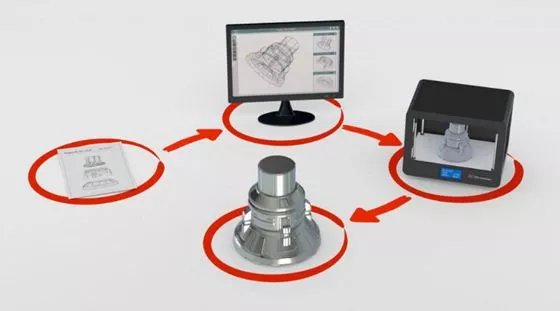
The transition between a validated prototype and a manufactured product at scale is where many first-time launches get stuck, delayed, or destroyed. Inventors who reach this stage have already done the hardest creative work — the idea, the design, the prototype that proves it works. What comes next is different work entirely: supplier qualification, design freeze, tooling commitment, pilot production, and quality systems. Each one has a specific failure mode that ends or stalls launches. This guide covers what has to be true at each step, what the failure modes are, and how a successful transition is structured for inventors, entrepreneurs, and small business owners taking a first product to market.
Quick Answer
A successful prototype-to-production transition requires six things in sequence: a prototype that clears specific validation gates, qualified suppliers who can actually produce the design at the target scale, a formal design freeze, DFM-driven tooling commitment with the right tooling investment for the target volume, pilot production that validates the process before scale, and quality systems that protect both the product and the IP. Each step has a specific failure mode. The transition succeeds when each gate is treated as a gate, not a suggestion.
Key Facts
Most prototype-to-production failures happen at known transition points — not from manufacturing surprises, but from skipping or compressing the gates that catch the surprises in advance
Tooling investment is the largest non-recoverable spend in physical product development — changes after tooling commitment cost orders of magnitude more than changes at CAD
Design freeze is the gate that protects tooling investment — every change after freeze is a change against a financial commitment
Supplier qualification matters more than supplier pricing — the lowest quote is rarely the lowest total cost when small-volume tolerance, communication, and quality systems are factored in
First-pass yield rate at or above ninety percent is the standard success criterion for pilot production before committing to scaled manufacturing
For inventors and small founders, the prototype-to-production transition is the most operationally complex stretch of the entire development process. It involves more parties (suppliers, tooling shops, logistics partners), more decisions with non-recoverable cost (tooling, materials commitments, pilot runs), and more risk of compounding errors (a missed step early shows up as a problem late) than any other phase. The teams that navigate it successfully treat it as a structured sequence of gates, not as an extension of the prototyping phase.
Key Takeaways
The prototype must clear specific validation gates — production-representative materials, durability testing, user testing, IP filing — before any supplier conversation begins
Supplier qualification covers capability, quality systems, small-volume tolerance, communication, and IP protection — not just price
Design freeze is the operational gate that ends Phase 2 economically — changes after freeze cost tooling money, schedule weeks, and potentially scrapped parts
Tooling investment should match target volume — aluminum tools for small runs, steel tooling only when volume justifies it
Pilot production validates the process before scale — first-pass yield, statistical process capability, and quality documentation all get tested here
Quality systems built during the transition protect production quality, brand reputation, unit economics, and the chain of evidence that makes a patent enforceable
Table of Contents
Why the Prototype to Production Transition Is the Most Common Failure Point
What Has to Be True About Your Prototype Before Production Conversations Begin
How Supplier Qualification Works — Before You Commit a Dollar to Tooling
Why Design Freeze Is the Gate, Not the Suggestion
What Happens at Tooling Commitment — And How to Protect the Investment
How Pilot Production Validates the Process Before Scale
How Quality Systems Protect Both Production and Your IP
How Rabbit Product Design Manages the Prototype to Production Transition
Why the Prototype to Production Transition Is the Most Common Failure Point
First-time inventors who reach a working prototype often think the hard part is over. It isn’t — it’s shifted. The transition from a validated prototype to a manufactured product at scale is a different discipline entirely, with its own gates, its own failure modes, and its own non-recoverable costs. Treating it as an extension of the prototyping phase is the most common cause of delayed launches and abandoned projects in first-time product development.
The cost curve at this stage is different from earlier phases. A design change during prototyping costs hours of engineering work. A design change after tooling has been committed costs the original tooling investment, new tooling, scrap from production runs in process, schedule weeks while the new tooling is fabricated, and the cascading delays through any downstream commitments — launch campaigns, retailer commitments, investor milestones. The total cost can be twenty to fifty times higher than the same change at CAD. Avoiding those changes is the discipline.
Specific transition failures appear in nearly every first-time launch. Tooling gets cut before the design is truly frozen, locking in a flaw the inventor hadn’t finished noticing. A supplier gets picked on the lowest quote without qualification, and the small-volume launch run reveals quality problems the spec sheet didn’t predict. DFM gets treated as a recommendation when it should be a gate, leaving manufacturability problems to surface at first-article inspection. The pilot run gets compressed or skipped to make a launch date, and the first production run becomes the pilot run — except now there’s revenue and customer expectation riding on it.
None of these failures result from bad work by any one party. They result from treating the transition as a sequence of handoffs between vendors rather than as a structured process under one coordinated team. A patent attorney who hasn’t seen the final CAD files, an engineering vendor whose work ends at design release, a manufacturer who receives a quote request without DFM context — each party operates with partial information, and the gaps between them are where transition failures live.
The cost of changes rises sharply at the transition — from engineering hours at CAD to tooling, schedule, and scrap costs after commitment.
Tooling committed before design freeze locks in flaws that haven’t finished surfacing.
Suppliers chosen on lowest quote without qualification often produce small-volume launch quality problems.
DFM treated as a recommendation rather than a gate leaves manufacturability problems for first-article inspection.
The transition fails most often at the gaps between separate vendors — not from any single party doing bad work.
The discipline at this stage isn’t to iterate faster. It is to ensure you don’t have to.
What Has to Be True About Your Prototype Before Production Conversations Begin
Before any supplier conversation, the prototype has to clear specific gates. Going to production with an incomplete prototype is the most common cause of late-stage redesigns. Each gate below is a question that should be answered yes, with documented evidence, before a manufacturer is contacted for quotes.
The design has to be validated against the actual use case, not just against laboratory conditions. A product that works in a controlled environment but fails when dropped, used outdoors, exposed to humidity, or used by people who didn’t design it is a product that will produce returns and warranty claims at scale. Real-world condition testing, durability cycling, and edge-case use scenarios all belong in the prototype validation — not in customer hands.
The prototype has to be tested in production-representative materials. A part validated only in 3D printed plastic doesn’t answer whether the part will survive in its production material. A part validated in CNC-machined aluminum or in soft-tooled parts of the actual production material does. The transition to production assumes that the design has been pressure-tested against the materials and processes that will eventually make it — not just against the materials that were convenient during early prototyping.
User testing has to be complete — with people who are not friends, family, or members of the inventor’s own team. The bias problem in early user feedback is well-known: people who like the inventor want the inventor to succeed and adjust their feedback accordingly. Independent user testing, even on a small scale, surfaces the usability and ergonomic issues that affect commercial reception. Going to production with untested assumptions about user behavior is the most expensive form of optimism in product development.
IP has to be filed appropriately. A provisional patent application at minimum, ideally with the non-provisional in process. Sharing detailed production files with manufacturers, especially overseas, without IP filings in place is a disclosure event that destroys patent rights in over 150 countries that follow absolute novelty rules. The sequence is: file first, qualify suppliers, share under NDA, then commit. Inverting this sequence has cost inventors their patent rights more often than any other single mistake at this stage.
Unit economics have to work. The target manufacturing cost has to fit inside a retail price the market will support, with margin for the channel, the brand, and the business. An inventor who skips this check at the prototype stage and discovers at first-article quote that the unit cost is twice what the business model assumed has only painful options: reduce features (which may invalidate the design validation), accept lower margin (which may make the business unviable), or raise the retail price (which may eliminate the target customer). Catching this at the prototype stage is the cheapest opportunity to fix it.
Design validated against real-world use conditions, not just laboratory conditions.
Prototype tested in production-representative materials — not only in early-iteration materials.
User testing complete with independent users, not just friends and family.
IP filings in place — at minimum a provisional patent application before any external disclosure.
Unit economics validated — target manufacturing cost confirmed to fit the business model and retail pricing.
If any of these gates is not cleared, going to production is premature. The cost of one more validation cycle is dramatically less than the cost of resolving the same gap after tooling has been committed.
How Supplier Qualification Works — Before You Commit a Dollar to Tooling
Picking a manufacturer based on the lowest quote is the most common and most expensive sourcing mistake at the prototype-to-production transition. The lowest quote frequently comes with the longest lead times, the smallest tolerance for change orders, the least supportive communication, and the lowest investment in quality systems. The total cost of working with a poorly-qualified supplier is dramatically higher than the savings in the per-unit price.
Real supplier qualification covers six dimensions. The first is capability match: does the supplier actually have the equipment, materials experience, and process capability to produce the design as specified? A factory that produces beautiful injection-molded parts may have no useful capability for the over-molding or insert-molding the design requires. A cut-and-sew factory excellent at soft goods may not handle the structural hardware integration the product needs. Capability has to be verified against the specific design, not assumed from the supplier’s general reputation.
The second is quality systems. ISO 9001 certification, first-article inspection procedures, statistical process control on critical dimensions, and incoming material inspection are the table stakes. Suppliers without documented quality systems may produce acceptable parts at low volume but introduce quality variability as volume scales. Reviewing the supplier’s actual quality documentation — not just their certification status — reveals whether the systems are real or nominal.
The third is small-volume tolerance. Many high-quality manufacturers are built for large-volume production and find small-volume work either unprofitable or operationally inconvenient. For inventors planning a launch of a few thousand units, a supplier whose minimum order quantity is fifty thousand is not a partner — they are a future opportunity. The right supplier for a first launch is one whose business model fits small-volume work, with the option to scale as the product proves itself.
The fourth is communication. Suppliers who respond slowly, document poorly, or explain reluctantly during the qualification process will not behave differently during production. The transition to production requires intense back-and-forth on technical details, tolerance interpretation, and process decisions. A supplier whose communication pattern doesn’t support that is a supplier whose technical decisions will be made without inventor input — which is rarely the outcome the inventor wants.
The fifth is IP protection. NDAs at the start of the qualification conversation, clear ownership terms for tooling, exclusivity provisions where appropriate, and supplier reputation on respecting design ownership all matter. Each supplier conversation involves sharing increasingly detailed design files. Working with suppliers who have a documented history of respecting IP — not just signing NDAs but operating in alignment with them — protects the design through the conversation.
The sixth is reference checks with comparable clients. Other inventor or small-founder clients of the supplier are the most relevant reference, not large corporate clients. The supplier’s behavior toward a million-unit customer says little about how they will treat a five-thousand-unit launch. References from clients of similar size and complexity reveal the actual working relationship, response time, and problem-solving behavior the inventor will receive.
Capability match: equipment, materials experience, and process capability verified against the specific design.
Quality systems: ISO 9001 documentation, first-article inspection, statistical process control — not just certification status.
Small-volume tolerance: the supplier’s business model fits launch-scale volumes, not just enterprise-scale production.
Communication: response speed and quality during qualification predicts behavior during production.
IP protection: NDAs, tooling ownership, exclusivity, and documented respect for design ownership.
References from comparable inventor or small-founder clients — not from large corporate clients.
Supplier qualification is the work that the lowest-quote shortcut tries to skip. The qualification cost is paid once. The cost of working with a poorly-qualified supplier is paid every month of the production run.
Why Design Freeze Is the Gate, Not the Suggestion
Design freeze is the formal commitment that the design is finalized and no further changes will be made without going through change control. It is the operational gate that ends Phase 2 economically and authorizes the tooling commitment that begins Phase 3. Treating design freeze as a flexible target rather than a fixed gate is the most common transition failure after supplier qualification mistakes.
Before design freeze, changes cost engineering hours. The CAD model gets updated, drawings get revised, the spec sheet gets reissued. After design freeze, every change is a change against a financial commitment — tooling that was specified to the released design, supplier quotes that were generated from the released BOM, material orders that were placed against the released drawings. A change that costs four hours of engineering before freeze costs four weeks of schedule and several thousand dollars in tooling rework after freeze.
The discipline of design freeze is the discipline of saying no to small improvements. First-time inventors keep finding things they want to add: a small ergonomic refinement, a slightly better material, an additional feature, a minor cost reduction. Each one looks individually cheap. In aggregate, they are what extends launch dates by months and inflates tooling budgets. The teams that ship on time are the ones who close the design at freeze and channel further improvements into a version-two roadmap rather than into the version-one tooling.
Design freeze requires specific deliverables to be complete: DFM review signed off by both the design team and the manufacturer, production-intent CAD files released and version-controlled, the bill of materials finalized with part numbers and approved vendors, production drawings released with quantifiable acceptance criteria, IP filings updated to reflect the final design (or continuation applications planned), and the formal sign-off from the inventor or product owner. Anything short of all of these means the design isn’t actually frozen — just paused.
For products with electronics, design freeze covers hardware, firmware, and any companion app as a coordinated commitment. Hardware that is frozen while firmware is still iterating produces a different transition risk: the production hardware may not behave correctly when the final firmware loads, or the firmware may need rework once the production hardware revisions surface. Connected products freeze well only when hardware and software freeze on coordinated schedules.
Design freeze is an operational gate — not a flexible target.
Before freeze: changes cost engineering hours. After freeze: changes cost tooling, schedule, and potentially scrap.
The discipline is saying no to small improvements — and channeling them into a version-two roadmap.
Required deliverables: DFM sign-off, released CAD, finalized BOM, production drawings, IP updated, formal sign-off from product owner.
For connected products: hardware, firmware, and app must freeze on coordinated schedules.
Teams that respect design freeze ship on time. Teams that treat it as a suggestion ship eventually, at substantially higher cost.
What Happens at Tooling Commitment — And How to Protect the Investment
Tooling commitment is the largest non-recoverable spend in physical product development. Once the tool is cut, the money is spent regardless of how the rest of the launch goes. Protecting that investment requires aligning tooling decisions with the actual scale of the launch — not the hoped-for scale several years out.
Tooling cost scales with both complexity and durability. Aluminum tools for short production runs cost a fraction of steel tools designed for millions of units. For first-time inventor launches — launches in the hundreds to low tens of thousands of units — aluminum tooling, soft tooling, or hybrid approaches typically deliver the right balance of cost and capability. Steel tooling becomes justified once the production volume warrants it; committing to steel tooling for a first launch is one of the most common overinvestments in early-stage product development.
The decision between hard and soft tooling depends on the volume the product needs to reach. For a Kickstarter or small retail test, soft tooling — silicone molds, urethane casting, low-volume aluminum injection — produces parts in production-representative materials at a fraction of full hard tooling cost. The soft-tooled launch generates real production data, real customer feedback, and real revenue, all of which inform the eventual investment in hard tooling for higher-volume production. For inventors with limited capital and unproven market demand, soft tooling first is almost always the right financial choice.
Tooling ownership matters and is frequently overlooked. Who owns the molds, dies, or fixtures the manufacturer is producing? The contract terms determine whether the inventor can move the tooling to a different supplier if the current relationship fails, whether the tooling can be modified without supplier approval, and whether the inventor has an ongoing asset or simply a relationship. Tooling ownership should be documented explicitly in the supplier agreement — not assumed.
Multi-supplier capability is the contingency that protects against supplier-side disruptions. A design and tooling strategy that allows production at more than one supplier — either through duplicate tooling, modular designs, or supplier-independent material specifications — dramatically reduces the operational risk of a single-supplier failure. For inventors building a business, this contingency matters more than the small per-unit savings of single-supplier optimization.
Different product categories have different tooling realities. Consumer products with injection-molded plastic components commit the heaviest tooling investment at this stage. Soft goods with cut-and-sew construction commit less in tooling but more in pattern grading, sample development, and material qualification. Hardwood products with CNC-machined components have lower tooling cost but higher per-unit machining time. Electronic products commit tooling for enclosures while also committing PCB production setup and component sourcing arrangements. The right tooling strategy is the one matched to the product’s actual production realities, not a generic template.
Tooling cost scales with complexity and durability — aluminum for short runs, steel only when volume justifies it.
Soft tooling first is almost always the right financial choice for first-time inventor launches.
Tooling ownership terms matter — document who owns the tools and whether they can be moved between suppliers.
Multi-supplier capability reduces operational risk and is more valuable than single-supplier optimization for first-time launches.
Different product categories have different tooling realities — consumer products, soft goods, hardwood, and electronics each commit differently at this stage.
Tooling commitment is where the largest mistakes at this transition get made. The cost of overinvesting in tooling for an unproven product is the cost of capital that could have been spent on marketing, distribution, or further development.
How Pilot Production Validates the Process Before Scale
Pilot production is the small-batch run that validates the entire production process before scale. It typically runs fifty to five hundred units, on the actual production tooling, through the actual production line, with first-article inspection and full documentation. Its purpose is to surface every problem that will occur in full production — while the production run is small enough that fixing the problem is still affordable.
A pilot run tests more than just the parts. It tests the supplier’s actual process discipline: are the work instructions clear, are the operators trained, is the quality inspection happening as specified, is the documentation getting filed correctly, is the schedule realistic. It tests the supply chain: are the materials arriving when needed, in the specified quality, with the specified documentation. It tests packaging, labeling, palletizing, and shipping logistics. Every link in the chain gets exercised at a small enough scale that breakage is fixable rather than catastrophic.
The standard success criteria for pilot production are well-established across hardware industries. First-pass yield rate at or above ninety percent indicates the process is producing the design with acceptable defect rates. Process capability indices — Cpk at or above one and a third for critical parameters — indicate the production process is statistically capable of meeting the specifications. Inspection results match the design intent with the quantifiable acceptance criteria established at design freeze. Failure to hit any of these targets indicates a process problem that needs resolution before scale, not at scale.
For inventors specifically, the temptation to skip pilot is strong. The pilot run costs money that an inventor may rather spend on marketing, the schedule pressure to launch is real, and the prototype may be so well-validated that the inventor believes scale will be straightforward. The data does not support that belief. Even excellent prototype validation does not predict supplier process discipline, supply chain reliability, or first-article inspection results. The pilot is what proves these.
When pilot production reveals problems — and it usually does, in small ways — the resolution path is faster and cheaper than the same resolution at full production. A first-article inspection that finds a tolerance drift in one component triggers a tool adjustment and a second small run. The same drift discovered in full production scrap-rates a large quantity of units. The pilot is, in effect, an insurance policy whose premium is paid before the policy is needed.
Pilot production typically runs fifty to five hundred units on the actual production tooling and line.
It tests more than parts — it tests process discipline, supply chain, packaging, and logistics together.
Standard success criteria: first-pass yield at or above ninety percent, Cpk at or above one and a third for critical parameters, inspection matching acceptance criteria.
Skipping pilot to save time or money is among the most common and most expensive transition mistakes.
Problems found in pilot are dramatically cheaper to resolve than the same problems found in scaled production.
A pilot run that hits success criteria is the gate that authorizes scaled production. A pilot run that misses criteria is the signal to fix the process before scale, not after.
How Quality Systems Protect Both Production and Your IP
Quality systems are not optional infrastructure. They are what protects the product against consistency failures, the business against margin-killing defect rates, the brand against recall events, and the IP against enforcement gaps. Building the quality system during the transition — rather than reactively after problems emerge — is the difference between a sustainable launch and a fragile one.
The quality system covers the full production chain. Incoming material inspection verifies that raw materials and purchased components meet specification before they enter production. In-process quality checks monitor critical parameters during production, catching drift before it produces scrap. First-article inspection on every new tool, new material lot, or process change verifies that production output still meets the design intent. Final inspection before shipping confirms that what leaves the factory is what was specified. Returns and warranty data feeds back into the process, identifying systemic issues that surface only in customer use.
For inventors, the temptation is to treat quality assurance as the manufacturer’s job. The manufacturer does execute the QA — but the inventor still has to specify what QA standards apply, what documentation is expected, what gates are gated, and what reporting cadence is required. A manufacturer’s default QA practices may be adequate for their typical customer base but inadequate for the specific risk profile of a particular product. The inventor specifies; the manufacturer executes; the documentation creates the chain of evidence.
The IP enforcement dimension is widely underappreciated at this stage. A patent is only valuable if the patent holder can demonstrate that the commercial product embodies the patent claims. The chain of evidence runs from the patent claims to the approved design specifications to the production records that document what was actually manufactured. First-article inspection records, statistical process control data, and final inspection records together create that chain. Without the chain, proving that the commercial product is the patented product in an enforcement action requires reconstructing records that may not exist.
The QA system also creates the operational backbone for ongoing production. Quality data identifies process improvements, supplier performance issues, and design weaknesses that surface only at scale. The same data informs warranty policy, customer service responses, and the version-two roadmap. A quality system built during the transition continues paying value for the life of the product; one bolted on reactively after problems emerge typically costs more to operate and produces worse outcomes.
Quality systems cover the full production chain: incoming materials, in-process checks, first-article inspection, final inspection, returns/warranty data.
The inventor specifies what QA standards apply, what documentation is expected, what gates are gated — the manufacturer executes.
Quality documentation creates the chain of evidence that makes a patent enforceable against the commercial product.
Quality data is the operational backbone for ongoing production, warranty policy, and the version-two roadmap.
Systems built during the transition outperform systems bolted on reactively after problems emerge.
For an inventor moving from a single validated prototype to a manufactured product line, the quality system is what turns the manufacturing relationship from a transaction into an asset.
How Rabbit Product Design Manages the Prototype to Production Transition
Rabbit Product Design is a product development firm built around the inventors, entrepreneurs, and small founders who carry the most risk on a first physical product. The firm has been in business for nine years, has worked on over 2,000 products, and is staffed entirely by senior engineers — an average of 27 years of experience per team member.
The prototype to production transition is where Rabbit’s integrated model produces the most concentrated value. Because one coordinated team handles design, prototyping, supply chain qualification, tooling decisions, factory management, and quality systems, the handoff failures that cause most transition problems simply do not occur. The supplier qualification work is informed by the DFM review. The DFM review is informed by the IP strategy. The tooling decisions are informed by the unit economics work done at Phase 1. Each stage knows what the previous stage decided and what the next stage needs.
Phase 3 — Sourcing & Manufacturing — is the operational expression of this approach. Supply chain qualification identifies and vets manufacturers across Rabbit’s network for the specific product, the specific volume, and the specific quality requirements. Tooling decisions are sized to the actual launch — aluminum or soft tooling for short runs, hard tooling only when volume justifies. Factory management runs the production process against documented design specifications and quality acceptance criteria. Build product, shipping, and logistics complete the path from validated prototype to product in customer hands.
Rabbit’s focus reflects who actually benefits from this integration: consumer products of all kinds, soft goods (bags, cases, wearables, sports gear, pet products), hardwood products (furniture, fixtures, displays, storage), electronic products and IoT devices, and inventor or entrepreneur projects spanning every category. Most clients are individuals or small business owners — the audience that large enterprise design firms are not built to serve at accessible cost.
Three things shape how engagements run day-to-day. Senior engineers handle every project from the start — there is no junior tier doing the early work. DFM and risk mitigation are embedded from concept onward, not bolted on as separate audits at the end. And the firm is built to be accessible to people developing their first product, not only to funded startups with seven-figure budgets.
Key Services
Phase 1 — Research & Ideation
Patent research and freedom-to-operate analysis
Patentability assessment and filing strategy
Product evaluation and opportunity validation
Technology research and technical feasibility
Phase 2 — Design & Prototype
Industrial design and creative product design
Mechanical engineering
Electronics design, firmware development, and app development
Prototyping: from printing to molding, CNC machining, and soft tooling
Design reviews at defined gates
Phase 3 — Sourcing & Manufacturing
Supply chain qualification
Tooling and molding
Factory management and quality control
Production builds, shipping, and logistics
Phase 4 — Branding & Marketing
Brand identity and positioning
Go-to-market strategy
Operational launch support
Key Benefits
Senior engineers on every project, averaging 27 years of experience
Integrated handoff from validated prototype through pilot production and scale — no transition gaps between separate vendors
Tooling decisions sized to the actual launch, not the hoped-for scale years out
Quality systems built into the production process, not bolted on reactively
9 years and over 2,000 products of accumulated transition experience
End-to-end services accessible to individual inventors, not only to funded companies
To start a product development engagement that runs from validated prototype through scaled production under one coordinated team, contact Rabbit Product Design.
Conclusion
The prototype to production transition is the most operationally complex stretch of physical product development. The inventors who navigate it successfully treat it as a structured sequence of gates: a prototype that clears specific validation requirements, suppliers qualified on capability rather than price, a formal design freeze before tooling, tooling sized to the actual launch, pilot production that validates the process at small scale, and quality systems built into production from day one. None of these steps can be safely compressed or skipped. Each gate that is treated as a gate — not a suggestion — is a transition failure that doesn’t happen. To start a product development engagement with senior engineers covering the full transition from validated prototype through scaled production, contact Rabbit Product Design.
FAQ
How do I know if my prototype is actually ready for production?
The prototype is production-ready when five things are true: the design has been validated against real-world use conditions (not just laboratory conditions), the prototype has been tested in production-representative materials, user testing has been done with independent users, IP filings are in place, and unit economics work at the target manufacturing cost. If any of these is missing, going to production is premature — and the cost of one more validation cycle is dramatically less than the cost of resolving the gap after tooling has been committed.
How do I find the right manufacturer for my product?
Supplier qualification covers six dimensions: capability match against the specific design, quality systems documentation, small-volume tolerance, communication quality during qualification, IP protection practices, and reference checks with comparable inventor or small-founder clients. The lowest quote is rarely the lowest total cost when these dimensions are factored in. The right supplier for a first launch is one whose business model fits small-volume work — not necessarily the supplier with the largest capacity.
What is design freeze and why does it matter?
Design freeze is the formal commitment that the design is finalized and no further changes will be made without going through change control. It’s the operational gate that ends the design phase economically and authorizes the tooling commitment that begins manufacturing. Before freeze, changes cost engineering hours. After freeze, changes cost tooling money, schedule weeks, and potentially scrap. The discipline of design freeze is the discipline of saying no to small improvements — and channeling them into a version-two roadmap rather than the current launch.
Should I commit to hard tooling or soft tooling for my first launch?
For most first-time inventor launches — launches in the hundreds to low tens of thousands of units — soft tooling, aluminum tooling, or hybrid approaches typically deliver the right balance of cost and capability. Steel tooling becomes justified once production volume warrants it; committing to steel tooling for an unproven product is one of the most common overinvestments in early-stage product development. The right tooling strategy is matched to the actual launch volume — not to the hoped-for scale several years out.
Why is pilot production worth the cost when my prototype already works?
Pilot production tests more than just the parts — it tests the supplier’s actual process discipline, the supply chain, packaging, labeling, and logistics together. Even excellent prototype validation does not predict supplier process discipline, supply chain reliability, or first-article inspection results. Problems found in pilot production are dramatically cheaper to resolve than the same problems found in scaled production, where they scrap larger quantities of units and disrupt customer commitments. The pilot is, in effect, an insurance policy whose premium is paid before the policy is needed.
Sources
Keywords: prototype to production, design for manufacturing, supplier qualification, tooling investment, pilot production, manufacturing support
