
What Are Low-Fidelity vs High-Fidelity Prototypes?
Prototype fidelity is the degree to which a prototype represents the production product. Low-fidelity prototypes match the production product on a few dimensions; high-fidelity prototypes match it on many. Neither is automatically better. The right fidelity for any given prototype is the lowest one that reliably answers the specific question being asked, because every additional dimension of fidelity costs time and money. For inventors, entrepreneurs, and small business owners taking a first physical product to market, getting fidelity decisions right is what separates productive prototype investment from wasted iteration cycles. This guide covers what fidelity actually means in physical product development, the fidelity ladders that apply across Rabbit’s consumer products, soft goods, hardwood, and electronics verticals, the most common fidelity mistakes inventors make, and how each tier fits inside the four-phase development process.
Quick Answer
Low-fidelity prototypes (foam mockups, paper patterns, plywood stand-ins, 3D printed concept parts) are fast and cheap; they test basic concepts, proportions, and rough function. Mid-fidelity prototypes (CNC machined functional parts, sample-room soft goods samples, working hardwood prototypes in target species, breadboard electronics) test mechanism, ergonomics, and integration. High-fidelity prototypes (soft-tooled silicone parts, pre-production salesman samples, production-process-equivalent hardwood pieces, DVT electronics builds) test production behavior, material reality, and certification readiness. Match fidelity to the specific question being asked — the lowest fidelity that answers the question reliably is the right choice.
Key Facts
Prototype fidelity in physical product development is not the same as fidelity in digital or UX prototyping — the dimensions, methods, and trade-offs are different
Fidelity has multiple dimensions: geometric (shape and size), material (production materials vs. proxy materials), process (production method vs. prototype method), functional (does it work), and visual (does it look like production)
Each Rabbit vertical — consumer products, soft goods, hardwood, electronics — has its own fidelity ladder with category-specific tiers and tools
The most expensive fidelity mistakes are jumping to high-fidelity too soon (premature investment in production-representative work) and staying at low-fidelity too long (missing risks that only surface in production-representative materials)
Fidelity should match the question being asked — not the inventor’s confidence in the design or the manufacturer’s sales pitch for premium prototyping
For first-time inventors, the practical implication is that fidelity is a decision — not a default. The default in much prototyping advice is to push toward higher-fidelity earlier than needed. This is expensive, often counterproductive, and based on a confusion between fidelity and quality. A perfectly executed low-fidelity prototype that answers the right question is a better investment than a high-fidelity prototype that answers a question the inventor wasn’t actually asking.
Key Takeaways
Fidelity is the degree to which a prototype represents the production product — across multiple dimensions, not a single scale
Physical product fidelity is distinct from digital fidelity — the tiers, methods, and economics differ
Low-fidelity prototypes are fast and cheap and best for concept-stage questions about form, proportion, and basic flow
Mid-fidelity prototypes test mechanism, ergonomics, and integration in production-equivalent materials at moderate cost
High-fidelity prototypes test production-process behavior, material reality, and certification readiness at higher cost and longer cycle time
Match fidelity to the question being asked — lowest fidelity that reliably answers the question is the right level
Each Rabbit vertical has its own fidelity ladder — consumer products, soft goods, hardwood, and electronics differ in what each fidelity tier looks like
Table of Contents
What Fidelity Means in Physical Product Prototyping
The Fidelity Ladder: Low-Fi, Mid-Fi, High-Fi Defined
How to Match Fidelity Level to the Question You’re Asking
Fidelity Ladders Across Rabbit’s Verticals
The Most Common Fidelity Mistakes Inventors Make
Where Each Fidelity Tier Lives in the Four-Phase Process
When Higher Fidelity Is Actually Worth the Cost
How Rabbit Product Design Manages Fidelity Across Development
What Fidelity Means in Physical Product Prototyping
Fidelity in prototyping means how closely a prototype represents the production product. A high-fidelity prototype is one that closely resembles what production will deliver; a low-fidelity prototype is one that captures the basic concept but differs from the production product in significant ways. Both have their place. Neither is automatically better than the other.
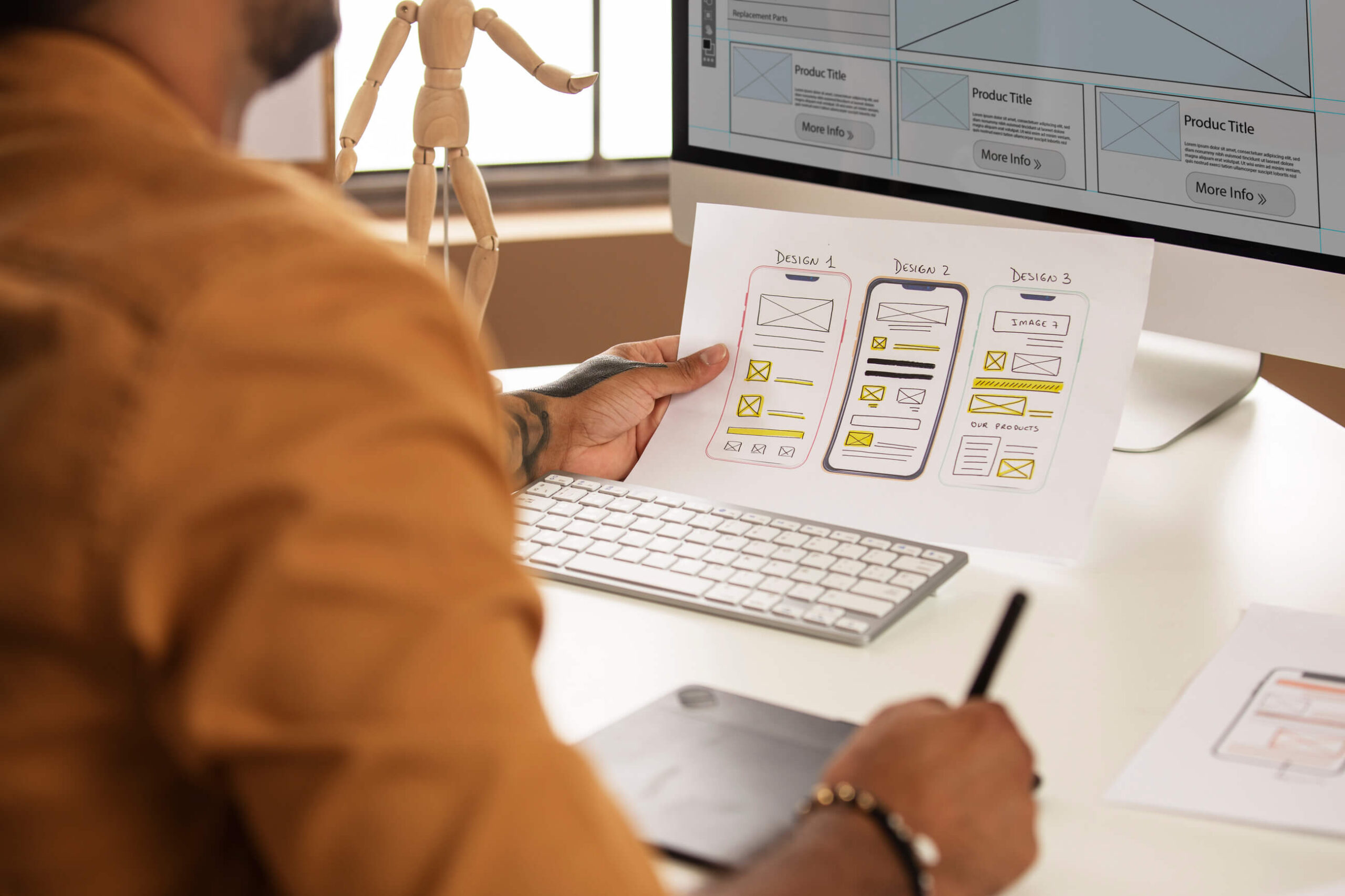
For inventors familiar with software or UX prototyping, the terminology may carry over from a different domain. In digital and UX prototyping, "low-fidelity" usually means paper sketches or wireframes and "high-fidelity" usually means interactive clickable mockups. Those distinctions apply to interface design, where the prototype is itself a visual artifact. Physical product prototyping uses the same vocabulary but the tiers, methods, and trade-offs are different — because the prototype is a physical object that has to be made, held, used, tested, and eventually evolved into a manufactured product.
Fidelity in physical product prototyping has multiple dimensions. Geometric fidelity is whether the prototype has the same shape and dimensions as the production product. Material fidelity is whether the prototype is made of production materials or of proxy materials chosen for prototype convenience. Process fidelity is whether the prototype was made by the production method (injection molding, cut-and-sew, CNC routing) or by a different method appropriate to prototype scale. Functional fidelity is whether the prototype actually does what the production product will do, under realistic conditions. Visual or aesthetic fidelity is whether the prototype looks like the final production product, including surface finish, color, and visible details.
A prototype can be high-fidelity on some dimensions and low-fidelity on others. A 3D-printed part may be geometrically high-fidelity (the same shape as the production part) but materially low-fidelity (printed plastic rather than injection-molded plastic) and process low-fidelity (additive manufacturing rather than injection molding). A foam mockup is low-fidelity geometrically (rough approximation), low-fidelity materially (foam rather than the production material), and high-fidelity functionally if it actually demonstrates the user interaction it’s meant to demonstrate. The fidelity question is always: "high-fidelity in what?"
For inventors making fidelity decisions, the practical implication is that the question is rarely "low-fidelity or high-fidelity?" — it’s "which dimensions of fidelity matter for this specific question, and what’s the cheapest way to get high fidelity on those dimensions?" An inventor evaluating ergonomics needs geometric and functional fidelity but may not need material fidelity. An inventor evaluating material behavior needs material fidelity but may not need final aesthetic fidelity. An inventor evaluating production-process behavior needs process fidelity above all else. Each question has its own fidelity profile, and the right prototype is the one that delivers fidelity where it matters at the lowest possible cost.
Fidelity = how closely the prototype represents the production product.
Physical product fidelity differs from digital/UX fidelity in tiers, methods, and economics.
Multiple dimensions: geometric, material, process, functional, visual.
A prototype can be high-fidelity on some dimensions and low-fidelity on others.
The right question: which dimensions matter for this specific test?
Understanding the multi-dimensional nature of fidelity is the first step in making smart prototyping decisions. Fidelity is not a single slider from "rough" to "polished" — it’s a profile across dimensions, and different prototype investments deliver different profiles at different costs.
The Fidelity Ladder: Low-Fi, Mid-Fi, High-Fi Defined
Physical product prototyping typically progresses through three broad fidelity tiers, with category-specific variations across verticals. Understanding what each tier actually delivers — and what it doesn’t — is what makes fidelity decisions deliberate rather than accidental.
Low-fidelity prototypes are fast and cheap. They use inexpensive materials, simple construction methods, and short cycle times. The purpose is to test basic concepts, validate proportions, explore ergonomic ideas, and answer questions that don’t depend on production-representative materials or processes. Examples include foam mockups of handheld products, plywood or pine stand-ins for hardwood furniture, muslin or scrap fabric mockups of soft goods, paper prototypes of patterns and layouts, simple 3D-printed concept parts. Cycle times typically run hours to a few days. Costs are low — sometimes effectively zero for materials, with the engineering or design hours being the main investment.
What low-fidelity prototypes are good for: answering questions about concept, proportion, basic ergonomics, layout, flow, and rough function. They’re excellent for early concept validation, internal team review, and decisions about whether to proceed with the concept at all. What they’re not good for: predicting production behavior, testing material properties, demonstrating production aesthetics, or supporting any test that depends on the prototype behaving the way the production product will behave.
Mid-fidelity prototypes advance fidelity on one or more dimensions to test specific questions that low-fidelity can’t answer. The most common pattern is increasing material and functional fidelity while keeping process fidelity low — a CNC-machined part in the target plastic or metal, made by machining rather than molding, gives material and functional fidelity at a fraction of the cost of soft tooling. Sample-room soft goods samples in production-representative fabrics and hardware test material and construction. Hardwood working prototypes in target species with target joinery test the actual material and assembly. Electronic prototypes with custom PCBs in 3D-printed housings test integration. Cycle times run one to four weeks; costs run thousands to low tens of thousands depending on complexity.
What mid-fidelity prototypes are good for: validating mechanism, function, ergonomics, material behavior, and integration. They’re the workhorse tier of Phase 2 development — used to answer most of the design and engineering questions that arise between concept and production. What they’re not good for: predicting production-process behavior, demonstrating final aesthetics, supporting certification testing that requires production-equivalent manufacturing.
High-fidelity prototypes match the production product on most or all dimensions. They use production materials, production-equivalent processes (or production-representative methods like soft tooling that closely simulate production), and approximate or actual production tooling. Examples include soft-tooled silicone or polyurethane parts that simulate injection molded parts, pilot-tool injection molded parts from short-run tooling, production-line-built soft goods samples (salesman or pre-production samples), hardwood pieces produced by the actual production woodshop with target finishing, DVT electronics builds with production-intent PCBs in production-intent housings. Cycle times typically run four to twelve weeks or longer; costs run into the meaningful five figures and beyond.
What high-fidelity prototypes are good for: validating production-process behavior, testing material under real production conditions, certification testing, investor demonstrations, marketing photography ahead of production launch, and any test that depends on the prototype behaving the way the production product will actually behave. What they’re not good for: early-stage concept validation (the cost-to-benefit ratio is wrong), questions that lower fidelity could answer, or situations where the design is still likely to change significantly.
Low-fidelity: foam, plywood, muslin, paper, simple 3D prints — hours to days, low cost, concept-level questions.
Mid-fidelity: CNC-machined parts, sample-room soft goods, hardwood working prototypes, breadboard electronics — one to four weeks, moderate cost, function and mechanism questions.
High-fidelity: soft tooling, pilot injection molding, pre-production soft goods samples, production-process hardwood, DVT electronics — four to twelve+ weeks, higher cost, production-behavior questions.
Each tier serves specific questions and is wrong for others.
The fidelity ladder isn’t a progression every prototype has to climb. Some projects can validate at low-fidelity and skip directly to production-representative work; others need to iterate at mid-fidelity multiple times before high-fidelity makes sense. The ladder is a vocabulary for talking about prototype decisions — not a mandatory sequence.
How to Match Fidelity Level to the Question You’re Asking
The central principle of fidelity decisions is that each prototype should answer a specific question, and the right fidelity is the lowest one that answers that question reliably. The mistake is using high-fidelity to answer questions that low-fidelity could answer (waste), or using low-fidelity to answer questions that require high-fidelity (false confidence). Both errors are common.
Questions that low-fidelity prototypes answer reliably include: Is the basic concept viable? Are the proportions right? Do the ergonomics work in concept? Does the user flow make sense? Is the assembly sequence approximately what we expect? These are concept-stage questions where rough materials and rough construction are sufficient — the answer doesn’t depend on production behavior. A foam mockup of a handheld product can answer "is this the right size?" definitively even though the foam doesn’t behave anything like the production plastic. A plywood mockup of a chair can answer "are these the right proportions?" because the chair geometry doesn’t require hardwood to feel right at the prototype stage.
Questions that mid-fidelity prototypes answer reliably include: Does the mechanism actually work under load? Are the ergonomics confirmed in production-equivalent materials? Does the assembly come together cleanly? Do the parts interface correctly? Are tolerances achievable in the target material? Does the product survive expected use cycles? These are function and integration questions where the material has to be representative but the production process doesn’t have to be exact. A CNC-machined functional prototype in production-grade plastic gives most of what mid-fidelity testing requires. A sample-room sewn soft good in production fabric tests construction without requiring the production line.
Questions that require high-fidelity prototypes include: How does the material behave under the actual production process? Will the part survive injection molding without sink marks, voids, or warpage? Does the production process produce consistent results, or does it produce variability the design has to absorb? Does the product pass regulatory certification testing? Does the product photograph well at production aesthetic? Are the user perceptions of feel, finish, and quality what we expect when production materials and methods are used? These are questions where the prototype has to behave like the production product because the question is about production behavior.
The diagnostic question to ask before every prototype is: what does this prototype need to prove? The answer determines the fidelity required. If the answer is "the concept works," low-fidelity is enough. If the answer is "the mechanism works in real material," mid-fidelity is required. If the answer is "production will produce what we designed," high-fidelity is required. Building higher-fidelity prototypes than the question requires is overinvestment; building lower-fidelity prototypes than the question requires is false confidence — and either error has a cost.
For inventors specifically, the temptation often runs toward higher fidelity earlier than needed. Higher-fidelity prototypes feel more like "real" products — they’re easier to show to potential investors, to mention in conversations about progress, to feel like the project is "real." None of those reasons is a good reason to invest in high-fidelity. The right reason is that a specific question requires it. Building a high-fidelity prototype to impress people rather than to answer a question is one of the most common ways inventor budgets get burned at the wrong phase of development.
Each prototype should answer a specific question; the right fidelity is the lowest one that answers it reliably.
Low-fidelity questions: concept viability, proportion, ergonomic concept, basic flow, assembly sequence.
Mid-fidelity questions: mechanism under load, ergonomics in production materials, integration, tolerance feasibility.
High-fidelity questions: production-process behavior, material under production conditions, certification, aesthetic perception.
Diagnostic: what does this prototype need to prove? The answer determines required fidelity.
Fidelity matched to question is the principle that makes the whole fidelity ladder useful. Without it, the ladder becomes a sequence to climb mechanically rather than a tool to deploy deliberately.
Fidelity Ladders Across Rabbit’s Verticals
Each product category has its own fidelity ladder — the specific tools, methods, and materials available at each tier differ by what the production process actually is. Understanding the vertical-specific ladder is what makes fidelity decisions practical at the level of individual prototype builds.
Consumer Products (Typically Injection-Molded)
For consumer products that will be produced by injection molding, the fidelity ladder runs from sketches and foam mockups (low) through 3D-printed concept models and CNC-machined functional prototypes in target materials (mid) to soft-tooled silicone or polyurethane parts and pilot-tool injection molded samples (high). The progression matches the production process: low-fidelity has nothing to do with injection molding; mid-fidelity uses production-equivalent materials made by a different process; high-fidelity uses processes that closely simulate or are versions of injection molding itself.
Production-representative testing for consumer products typically requires soft tooling at minimum — short-run tooling that simulates production injection molding behavior. Soft tooling reveals manufacturing realities that even excellent CNC prototypes can’t reveal: how the material flows in the mold, where sink marks appear, whether the design demolds cleanly, whether the production tooling can hold specified tolerances. For consumer products specifically, jumping directly from mid-fidelity CNC prototypes to production injection molding without soft-tool validation is among the most common (and expensive) fidelity mistakes.
Soft Goods (Bags, Cases, Wearables, Sports Gear, Pet Products)
For soft goods, the fidelity ladder runs through pattern mockups in muslin or scrap fabric (low), sample-room construction in production-representative materials (mid), salesman samples and pre-production samples (high), and TOP — top of production — samples (highest, on the actual production line). The sample approval cycle that runs through Phase 3 (lab dip, strike-off, salesman, pre-production, TOP) is essentially the soft-goods-specific fidelity sequence from mid to highest fidelity.
Soft-goods fidelity decisions are particularly nuanced because so many production realities depend on the specific factory and operators. A salesman sample built in the factory sample room by experienced operators may look excellent and still differ from what the production line produces with the actual operators and the actual pace. Pre-production samples are designed specifically to test this transition. For soft-goods inventors, the pre-production sample is the verification gate that confirms what the salesman sample promised will actually be delivered by production.
Hardwood Products (Furniture, Fixtures, Displays, Storage)
For hardwood products, the fidelity ladder runs from plywood or pine mockups at full scale (low), through working prototypes in production hardwood with target joinery (mid), to production-representative prototypes using production materials, production methods, and ideally production tooling/CNC programs (high). The progression matches the central role of joinery and wood movement in hardwood: low-fidelity validates proportion and basic construction; mid-fidelity validates that target joinery executes in target species; high-fidelity validates that the production woodshop can deliver consistently.
Hardwood fidelity has a specific characteristic that other verticals don’t: wood as a natural material means even high-fidelity prototypes show some variation that production runs will reproduce. A high-fidelity hardwood prototype validates that the design works in the species and joinery selected; it doesn’t guarantee that every production unit will be identical because no two boards of natural wood are identical. The high-fidelity prototype establishes what the acceptable variation range looks like for production QA.
Electronic Products and IoT Devices
For electronic products, the fidelity ladder is often described as EVT/DVT/PVT — Engineering Validation Test (mid-fidelity, custom PCB in prototype housing, demonstrating core function), Design Validation Test (high-fidelity, production-intent PCB and housing, validating reliability under all specified conditions), and Production Validation Test (highest fidelity, first production-line build, validating manufacturing process). Below EVT, low-fidelity electronics prototyping happens on breadboards, development boards, and 3D-printed enclosure mockups.
Electronics fidelity has its own particular character because so many failures only surface in high-fidelity DVT testing. Thermal management, electromagnetic compatibility, antenna performance in the production housing material, power consumption under realistic operating conditions, and firmware behavior on production-intent hardware are all DVT-stage questions. Compressing the EVT-DVT sequence to save time is among the most common causes of late-stage architecture problems that require costly rework.
Each Rabbit vertical follows the same fidelity principles — match fidelity to question, advance fidelity deliberately — but the specific tools, methods, and tiers look different. The senior practitioners working on each category bring the vertical-specific judgment about what fidelity is appropriate when.
The Most Common Fidelity Mistakes Inventors Make
Fidelity mistakes follow recurring patterns. Knowing what they are is what makes them avoidable.
The first mistake is jumping to high-fidelity too soon. The pattern looks like: a first-time inventor with a fresh concept commits to soft tooling, or to a salesman sample of a soft good, or to a production-representative hardwood prototype, before the basic concept has been validated at lower fidelity. The high-fidelity prototype reveals problems that any concept-stage low-fidelity prototype would have surfaced — but now the inventor has spent significantly more time and money to learn the same lesson. Premature high-fidelity is the most expensive fidelity error.
The second mistake is the opposite — staying at low-fidelity too long. The pattern looks like: an inventor iterates on 3D-printed concept models through five or ten rounds because each printed iteration is cheap and fast, never advancing to a CNC functional prototype that would test the actual mechanism in production-equivalent material. When the design eventually does advance to production-representative work, fundamental mechanism problems surface that should have been caught at mid-fidelity. The cost of staying at low-fidelity is hidden because each individual low-fidelity iteration is cheap — but the cumulative time and the eventual late-stage discovery costs significantly more than appropriate fidelity progression would have.
The third mistake is confusing fidelity with quality. The pattern looks like: an inventor treats "high-fidelity prototype" as synonymous with "good prototype" and treats "low-fidelity prototype" as synonymous with "rough" or "rushed." This produces over-investment in high-fidelity work that adds nothing to the answer the project needs, and under-investment in well-executed low-fidelity work that would answer the actual question. A well-executed low-fidelity prototype is not a worse prototype than a hastily-built high-fidelity one. Fidelity is purpose, not polish.
The fourth mistake is pursuing the wrong fidelity dimension. The pattern looks like: an inventor invests in visual fidelity (a beautiful, color-accurate, finish-correct prototype) when the question is structural integrity (does it survive a drop test?). Or invest in functional fidelity (a working mechanism) when the question is aesthetic perception (does it look like a premium product to a consumer?). Fidelity dimensions don’t interchange. A prototype that’s high-fidelity on the wrong dimensions doesn’t answer the question the project actually needs answered.
The fifth mistake is not advancing fidelity at all. The pattern looks like: an inventor builds one prototype, decides it’s good enough, and commits to production based on a single fidelity level that didn’t test the questions production-representative work would have surfaced. This is most common with inventors operating without engineering support, who don’t know what questions later fidelity tiers were supposed to answer. The cost lands at production stage — first-article surprises, manufacturing process problems, field failures that prototype iterations would have caught.
Jumping to high-fidelity too soon: spending on production-representative work before the concept is validated.
Staying at low-fidelity too long: iterating cheaply when the question requires production-equivalent material or process.
Confusing fidelity with quality: treating high-fidelity as automatically better than low-fidelity.
Pursuing the wrong fidelity dimension: getting visual fidelity when functional fidelity was the question.
Not advancing fidelity at all: committing to production based on a single prototype tier.
Each of these mistakes has a specific corrective discipline: ask what question the prototype needs to answer, identify the fidelity dimensions that matter for that question, choose the lowest fidelity tier that delivers on those dimensions, and advance to higher tiers only when the questions at higher tiers actually need answering.
Where Each Fidelity Tier Lives in the Four-Phase Process
Fidelity tiers map naturally to Rabbit’s four-phase development model. Each phase has fidelity expectations that match the questions that phase is built to answer.
Phase 1 — Research & Ideation — lives mostly at low-fidelity. The questions are about concept viability, market fit, IP landscape, and technology feasibility. Concept models, sketches, foam mockups, and similar low-fidelity work are appropriate at this stage. Investing in higher-fidelity work during Phase 1 is almost always premature because the concept itself may pivot based on Phase 1 findings; high-fidelity work locked in before Phase 1 conclusions are reached is work potentially thrown away.
Phase 2 — Design & Prototype — is where the fidelity ladder gets climbed. Early Phase 2 work is at low-fidelity — form studies, ergonomic mockups, basic CAD models. Mid-Phase 2 is where mid-fidelity work happens: CNC functional prototypes, sample-room soft goods samples, hardwood working prototypes, breadboard or EVT electronics. Late Phase 2 progresses to high-fidelity: soft-tooled samples, pre-production soft goods, production-process hardwood prototypes, DVT electronics builds. The full Rabbit prototyping approach — from printing to molding, CNC machining, and soft tooling — spans this progression with each method appropriate to a different phase position.
Phase 3 — Sourcing & Manufacturing — is where prototype fidelity meets production. The pre-production samples or pilot production runs represent the highest fidelity tier accessible before scaled manufacturing. First-article inspection on production tooling is the final fidelity gate before scaled production proceeds. By Phase 3, the design should have passed through the full fidelity progression in Phase 2 — not because of a process requirement but because the questions Phase 3 will surface are the questions earlier fidelity tiers were supposed to have answered.
Phase 4 — Branding & Marketing — typically doesn’t involve further prototyping; the production product itself is the highest-fidelity version. Marketing photography sometimes uses high-fidelity samples from late Phase 2 or pre-production Phase 3 runs to support brand and launch materials ahead of full production availability. This isn’t prototyping in the development sense; it’s using late-stage prototype outputs as marketing assets.
For inventors, the practical implication is that fidelity progression and phase progression are linked but not identical. A specific phase can have multiple fidelity tiers within it (Phase 2 spans low through high), and a specific fidelity tier can occur at different phase positions depending on the project. The four-phase model and the fidelity ladder are both useful frames for thinking about prototype investment — used together, they answer the question of when to invest in what fidelity for any specific prototype build.
Phase 1 (Research & Ideation): mostly low-fidelity — concept models, mockups, sketches.
Phase 2 (Design & Prototype): the full fidelity ladder — low to mid to high, climbed deliberately.
Phase 3 (Sourcing & Manufacturing): highest fidelity — pre-production samples, first articles, pilot production.
Phase 4 (Branding & Marketing): production product itself; late-stage prototypes may support marketing.
Phase progression and fidelity progression are linked but distinct — use both frames together.
The four-phase model gives the project structure; the fidelity ladder gives prototype decisions structure. Both are tools for making the work deliberate rather than accidental.
When Higher Fidelity Is Actually Worth the Cost
Higher fidelity costs more time and money. It’s worth that cost only when the question being asked actually requires it. Knowing when higher fidelity is justified — and when it isn’t — is what keeps prototype investment proportional to the value it delivers.
Material behavior is one of the clearest cases for higher fidelity. If the question is "how does this material behave under load," a prototype in the production material is required. CAD simulation and lower-fidelity proxies can predict behavior but not verify it. The cost of higher-fidelity material testing is justified when material behavior is the central design question.
Production-process behavior is the other clear case. Soft tooling for injection-molded parts, salesman or pre-production samples for soft goods, production-equivalent woodshop work for hardwood, DVT builds for electronics — all of these test production-process realities that lower fidelity can’t test. When the project is approaching tooling commitment, the cost of high-fidelity testing is justified to verify the production process will deliver what the design intends.
Certification testing often requires production-representative materials and methods. FCC certification for electronic products typically requires test samples produced in production-equivalent conditions. Material safety certifications often require samples from production materials. Drop testing, water resistance testing, and other regulatory or commercial certification programs each have specific fidelity requirements. The cost of producing certification-grade samples is justified by the certification value.
User testing depends on fidelity for some kinds of questions and not for others. Basic ergonomic and functional testing can use mid-fidelity prototypes effectively. Aesthetic perception testing, perceived-quality testing, and material-feel testing typically need high-fidelity samples. Investor demonstrations sometimes justify higher fidelity than the project would otherwise need, depending on what the demonstration needs to convey.
Higher fidelity is not worth the cost when: the concept hasn’t been validated at lower fidelity; the design is still likely to change significantly; lower-fidelity testing could answer the same question; the prototype is being built to impress people rather than to answer a question. Each of these is a case where the cost of higher fidelity exceeds the value it delivers — and recognizing them is what makes prototype investment proportional rather than wasteful.
Worth it: material behavior testing, production-process behavior, certification testing, certain user testing, IP-required working models.
Not worth it: concept-stage testing, designs likely to change, when lower fidelity could answer the question, prototypes-to-impress rather than prototypes-to-answer.
Higher fidelity is a tool with a cost — use it when the cost is justified by the value.
Fidelity decisions made deliberately produce better outcomes than fidelity decisions made by default. The default in much prototyping advice is to push toward higher fidelity earlier than necessary — inventors who push back against that default and invest in the right fidelity at the right phase get better results for less money.
How Rabbit Product Design Manages Fidelity Across Development
Rabbit Product Design is a product development firm built around the inventors, entrepreneurs, and small business owners who carry the most risk on a first physical product. The firm has been in business for nine years, has worked on over 2,000 products, and is staffed entirely by senior engineers — an average of 27 years of experience per team member.
Fidelity decisions are made by the senior engineers and designers running each project, drawing on the experience of having seen which fidelity tiers actually answer which questions across thousands of products. The team brings vertical-specific knowledge about what each fidelity tier looks like in consumer products, soft goods (bags, cases, wearables, sports gear, pet products), hardwood (furniture, fixtures, displays, storage), and electronic products and IoT devices — because each category has its own fidelity ladder and its own production realities.
The four-phase development model structures the fidelity progression. Phase 1 (Research & Ideation) lives mostly at low-fidelity — concept mockups, sketches, basic CAD models supporting patent research, product evaluation, and technology research. Phase 2 (Design & Prototype) climbs the full fidelity ladder: industrial design with low-fidelity concept work, mechanical engineering with mid-fidelity functional prototypes, electronics design and firmware/app development with EVT and DVT-stage builds, and the full prototyping approach spanning printing, molding, CNC machining, and soft tooling. Phase 3 (Sourcing & Manufacturing) handles the highest-fidelity work: supplier qualification, tooling decisions, pre-production samples, first-article inspection, and pilot production. Phase 4 (Branding & Marketing) uses production-quality samples to support brand identity, go-to-market strategy, and launch.
On the cost question that first-time inventors often weigh: the senior-engineer model means fidelity decisions get made with experience rather than by default. Junior teams tend to either over-invest in high-fidelity early (because high-fidelity prototypes feel more "real") or under-invest in fidelity progression (because each individual low-fidelity iteration is cheap). Senior engineers know when the question genuinely requires higher fidelity and when lower fidelity is sufficient. The total cost of an engagement is lower when fidelity decisions are right-sized — even when the per-hour rate is higher than a junior team’s.
Three things shape how engagements run day-to-day. Senior engineers handle every project from the start — there is no junior tier doing the early work. Fidelity decisions are made deliberately at each prototype stage, not by default. And the firm is built to be accessible to people developing their first product, not only to funded startups with seven-figure budgets.
Key Services
Phase 1 — Research & Ideation
Patent research and freedom-to-operate analysis
Patentability assessment and filing strategy
Product evaluation and opportunity validation
Technology research and technical feasibility (typically low-fidelity concept work)
Phase 2 — Design & Prototype
Industrial design and creative product design
Mechanical engineering
Electronics design, firmware development, and app development
Prototyping: from printing to molding, CNC machining, and soft tooling — the full fidelity ladder under one team
Design reviews at defined fidelity gates
Phase 3 — Sourcing & Manufacturing
Supply chain qualification across domestic and overseas suppliers
Tooling and molding (the highest-fidelity production-process investment)
Pre-production samples and first-article inspection
Production builds, shipping, and logistics
Phase 4 — Branding & Marketing
Brand identity and positioning
Go-to-market strategy
Operational launch support
Key Benefits
Senior engineers on every project, averaging 27 years of experience
Fidelity decisions made deliberately by people who have seen which tier answers which question
Full prototyping range under one team — from low-fi mockups through high-fi production-representative samples
Vertical-specific knowledge across consumer products, soft goods, hardwood, and electronics fidelity ladders
Lower total project cost through right-sized prototype investment, not through cheaper labor
9 years and over 2,000 products of accumulated fidelity-decision experience
To start a product development engagement where prototype fidelity decisions are made deliberately by senior practitioners — across all four phases under one coordinated team — contact Rabbit Product Design.
Conclusion
Prototype fidelity is not a single scale from rough to polished. It’s a profile across multiple dimensions — geometric, material, process, functional, visual — and the right fidelity for any specific prototype is the lowest one that reliably answers the specific question being asked. Low-fidelity prototypes answer concept-stage questions cheaply and fast. Mid-fidelity prototypes test function, mechanism, and integration in production-equivalent materials. High-fidelity prototypes validate production behavior and material reality at higher cost and longer cycle time. The most common fidelity mistakes — jumping to high-fidelity too soon, staying at low-fidelity too long, confusing fidelity with quality, pursuing the wrong fidelity dimension, not advancing fidelity at all — are mindset mistakes that experience can correct. For inventors, entrepreneurs, and small business owners taking a first physical product to market, fidelity discipline is what makes prototype investment productive rather than wasteful. To start a product development engagement with deliberate fidelity decisions made by senior practitioners across all four phases, contact Rabbit Product Design.
FAQ
What does prototype fidelity actually mean for a physical product?
Prototype fidelity is the degree to which a prototype represents the production product. It has multiple dimensions: geometric fidelity (shape and size), material fidelity (production materials vs. proxy materials), process fidelity (production method vs. prototype method), functional fidelity (does it work the way production will), and visual fidelity (does it look like the final product). A prototype can be high-fidelity on some dimensions and low-fidelity on others — the question is always which dimensions matter for the specific test being run.
When should I use a low-fidelity prototype vs a high-fidelity one?
Use low-fidelity when the question is about concept, proportion, basic ergonomics, layout, or rough function — these don’t require production-representative materials or processes. Use mid-fidelity when the question is about mechanism, function under load, integration, or material behavior — these require production-equivalent materials but not production-equivalent processes. Use high-fidelity when the question is about production-process behavior, material under actual production conditions, certification testing, or production aesthetics — these require both production materials and production-equivalent methods. The right fidelity is the lowest one that answers the specific question reliably.
What’s the difference between low-fidelity prototyping for physical products and digital/UX prototyping?
In digital and UX prototyping, "low-fidelity" usually means paper sketches or wireframes and "high-fidelity" usually means interactive clickable mockups. For physical products, fidelity has multiple dimensions (geometric, material, process, functional, visual) and the tiers are physical objects — foam mockups, 3D-printed parts, CNC functional prototypes, soft-tooled samples, pre-production samples. The vocabulary is the same; the methods, tools, costs, and trade-offs are different.
How many prototype iterations do I typically need at each fidelity tier?
It varies by project complexity and how cleanly each fidelity tier answers its questions. Low-fidelity work may run through one to several iterations during early concept exploration. Mid-fidelity functional prototypes typically run through one to three iterations as mechanism and integration questions get resolved. High-fidelity production-representative work usually runs through one to two iterations — with each iteration being a significant time and cost investment. The exact number depends on the project; the principle is that you advance to the next fidelity tier when the questions at the current tier are answered, not after a fixed iteration count.
Can I skip fidelity tiers if my design is straightforward?
Sometimes — but rarely entirely. Most projects benefit from at least one prototype iteration at each major fidelity tier because each tier surfaces different categories of issues. A truly straightforward project may compress the iteration count within each tier, but skipping a tier entirely (going from rough sketches directly to production-representative prototypes, for instance) usually surfaces problems at the high-fidelity stage that would have been cheaper to find at lower fidelity. Working with a senior engineering team is the most reliable way to determine when fidelity tiers can be compressed for a specific project.
Sources
Keywords: low fidelity prototype, high fidelity prototype, prototype fidelity, physical product prototyping, prototype types, prototype methods, prototype ladder
