
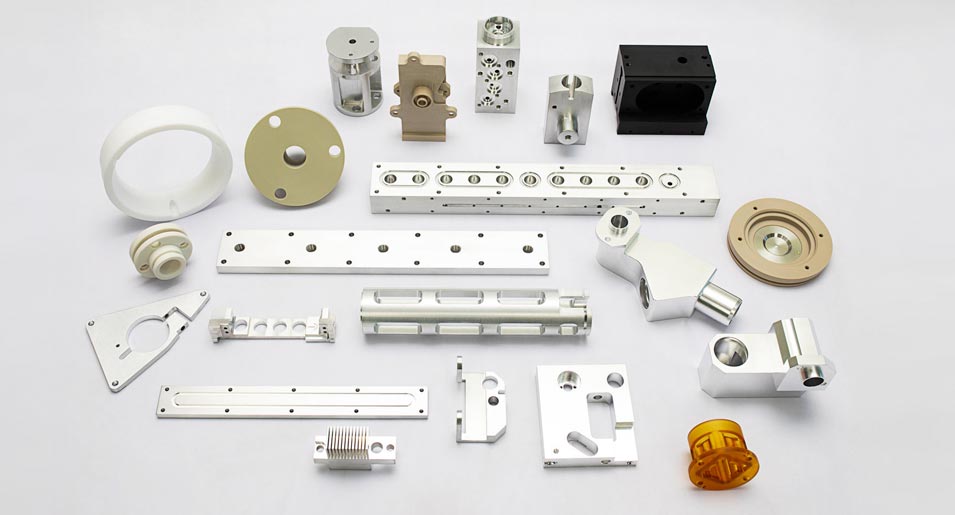
Hardware products — brackets, hinges, latches, fasteners, mounting systems, mechanical assemblies, fixtures, storage hardware, and the broader category of mechanical and structural components — follow a development path with its own materials, processes, design rules, and economic realities. Hardware development is not consumer product development with metal substituted in. It is its own discipline, with its own decisions to make at each phase. For inventors, entrepreneurs, and small business owners taking a first hardware product to market — whether to sell to other businesses, to license, to add to a product line, or to bring directly to market — understanding the hardware-specific path is what separates products that launch cleanly from products that struggle through production. This guide covers what counts as a hardware product, how hardware development differs from other categories, the materials and processes available, hardware-specific design considerations, manufacturing geography and volume decisions, common pitfalls, and how the four-phase model applies to hardware.
Quick Answer
Hardware product development covers the design, prototyping, and manufacturing of mechanical and structural components: brackets, hinges, latches, fasteners, mounting systems, mechanical assemblies, fixtures, and storage hardware. Hardware materials are typically metal (steel, aluminum, stainless steel, brass) with category-specific exceptions. Manufacturing processes scale from CNC machining and sheet metal fabrication at prototype and moderate volumes through investment casting, die casting, and stamping at higher volumes. Hardware-specific design considerations include thread integration, mating tolerances, off-the-shelf component compatibility, load and fatigue specifications, and surface finish standards. The right hardware development path depends on the specific category, the target volume, the customer (B2B versus consumer), and the budget — with the four-phase model (Research & Ideation, Design & Prototype, Sourcing & Manufacturing, Branding & Marketing) structuring the work across categories.
Key Facts
- Hardware products are mechanical and structural components — brackets, hinges, latches, fasteners, mounting systems, mechanical assemblies, fixtures, and storage hardware — with their own materials, processes, and design rules distinct from consumer products and electronics
- Hardware development often serves B2B customers (manufacturers buying components to incorporate into their products) as well as direct-to-consumer markets — the channel mix shapes the development priorities differently than for typical consumer goods
- Hardware production processes (CNC machining, sheet metal fabrication, casting, stamping, forging) have different economic ranges by volume — hardware products can often be produced economically at smaller volumes than injection-molded consumer products because hard tooling investment is lower for many hardware processes
- Hardware-specific design considerations include thread integration, mating tolerances, off-the-shelf component compatibility (catalog fasteners, bearings, retaining rings), load and fatigue specifications, and material-appropriate surface finishes
- Standards compliance matters more for hardware than for many other product categories — industry standards (ANSI, ASTM, ISO) for threading, fasteners, dimensional tolerances, and materials affect both design decisions and manufacturer qualification
For first-time inventors entering the hardware category, the practical implication is that the development priorities differ from what consumer product or electronics guides would suggest. Hardware tends to optimize for function, durability, and standards compliance rather than visual character or brand storytelling. Hardware customers — whether B2B buyers or specialty consumers — typically buy on specifications and performance rather than on aesthetic alone. The discipline of hardware development reflects these priorities at every phase.
Key Takeaways
- Hardware products are mechanical/structural components with their own materials, processes, and design considerations
- Hardware development often serves B2B customers and specialty consumers — channel mix differs from typical consumer goods
- Production economics for hardware can be favorable at smaller volumes than injection-molded consumer products allow
- Hardware-specific design considerations include thread integration, mating tolerances, off-the-shelf component compatibility, and load/fatigue requirements
- Standards compliance (ANSI, ASTM, ISO) plays a larger role in hardware development than in many other categories
- Material substitution and finish selection are among the highest-leverage cost-driver decisions in hardware design
- Hardware development still follows the four-phase model (Research & Ideation, Design & Prototype, Sourcing & Manufacturing, Branding & Marketing) — with category-specific execution at each phase
Table of Contents
- What Counts as a Hardware Product (and Why That Matters for Development)
- How Hardware Product Development Differs from Other Categories
- Materials, Processes, and Finishes for Hardware
- The Prototyping Path for Hardware Products
- Hardware-Specific DFM: Threads, Tolerances, and Off-the-Shelf Integration
- Manufacturing Geography and Volume Decisions for Hardware
- The Most Common Hardware Development Mistakes
- How Rabbit Product Design Handles Hardware Development Across the Four Phases
What Counts as a Hardware Product (and Why That Matters for Development)
Hardware products are mechanical and structural components designed to perform specific functions within larger systems or as standalone items. The category covers a broad range of products: brackets (mounting brackets, structural brackets, shelf brackets, equipment brackets), hinges (door hinges, cabinet hinges, specialty mechanical hinges, concealed hinges), latches (cabinet latches, security latches, mechanical catches, gate latches), fasteners (specialty screws, threaded inserts, custom fasteners, locking mechanisms), mounting systems (equipment mounts, modular mounting hardware, wall mount systems), mechanical assemblies (sliders, drawer mechanisms, lifting mechanisms, retracting assemblies), fixtures (retail display fixtures, equipment fixtures, custom mounting fixtures), and storage hardware (shelving brackets, locking systems, modular storage components).
What unites these categories is that the product’s function is mechanical or structural rather than electronic, decorative, or soft-goods-based. Hardware products solve specific physical problems: holding something in place, allowing something to move predictably, attaching one thing to another, supporting a load, organizing space, controlling access. The design priorities reflect these mechanical functions — hardware tends to optimize for strength, durability, dimensional accuracy, and standards compliance rather than for visual character or brand storytelling.
Hardware products are distinct from several adjacent categories that might seem similar at first glance. Hardware is not the same as consumer electronics (which include circuit boards, firmware, and electronic functions). Hardware is not the same as soft goods like bags, cases, wearables, sports gear, or pet products (which use fabric, foam, leather, and similar pliable materials). Hardware is not the same as the broader consumer product itself — the hardware vertical specifically covers the mechanical and structural components, which may be standalone products or components that go into larger products. A toaster includes hardware components (brackets, hinges, latches) plus electronics plus consumer-product housing; the hardware vertical addresses the mechanical pieces, not the assembled appliance.
The practical implication for inventors entering the hardware category is that the development path follows hardware-specific priorities. Materials are typically metal (with category-specific exceptions). Manufacturing processes are CNC machining, sheet metal fabrication, casting, stamping, and similar metal-focused processes. Design rules center on mechanical function, dimensional accuracy, load capacity, and standards compliance. Customers are often B2B buyers (other manufacturers buying components to use in their products) or specialty consumers who buy on specifications. The development priorities at each phase reflect these realities — different from what a consumer electronics development guide or a soft goods development guide would prioritize.
For inventors evaluating whether their product idea fits the hardware vertical, the diagnostic is whether the product’s value proposition is mechanical or structural. Products whose value is mechanical function (holds, hinges, latches, mounts, supports) generally fit hardware. Products whose value is electronic function fit electronics and IoT. Products whose value is fabric- or foam-based fit soft goods. Many products combine categories — a connected smart latch combines hardware (the mechanical mechanism) with electronics (the connectivity and control) — and the development team for those products needs capability across the relevant verticals.
- Hardware = mechanical and structural components: brackets, hinges, latches, fasteners, mounting systems, mechanical assemblies, fixtures, storage hardware.
- Function is mechanical or structural, not electronic, decorative, or soft-goods-based.
- Distinct from consumer electronics (which have firmware), soft goods (fabric/foam), and full consumer products (which combine multiple categories).
- Development priorities: strength, durability, dimensional accuracy, standards compliance.
- Customers are often B2B buyers or specialty consumers who buy on specifications rather than aesthetics.
Understanding the hardware vertical correctly is the first step in developing a hardware product. The category-specific realities at each phase produce a development path with its own priorities, decisions, and rhythms.
How Hardware Product Development Differs from Other Categories
Hardware development differs from consumer product development, electronics development, and soft goods development in ways that affect every phase of the project. Understanding the differences is what makes the development path productive rather than mismatched to category realities.
Customer profile. Hardware often serves B2B customers — manufacturers, contractors, integrators, OEMs — who buy components to incorporate into their products or projects. The selling motion is specification-driven: the customer evaluates the product against technical requirements, compares against alternatives on performance and price, and makes a buying decision based on whether the specifications fit the application. Consumer hardware (cabinet pulls, door hinges, mounting hardware sold at retail) follows somewhat different dynamics, but even there the customer typically buys on specifications, brand reputation for durability, and price rather than on emotional brand storytelling. This contrasts with most consumer goods (food, beverage, beauty, fashion, lifestyle products) where brand and aesthetic typically dominate buying decisions.
Production volume economics. Hardware can often be produced economically at smaller volumes than injection-molded consumer products allow. CNC machining produces hardware components from a few units to a few hundred units at consistent per-part cost. Sheet metal fabrication scales similarly. Soft tooling and small-scale casting work at moderate volumes. The tooling investment for many hardware processes is lower than the hard steel injection molding tools that consumer plastic products require. This means hardware products can be launched at smaller volumes than injection-molded plastic products typically can — a meaningful advantage for first-time inventors who can’t commit to the order quantities that injection molding economics require.
Standards compliance. Hardware development typically involves industry standards more heavily than other categories. ANSI standards for threading (UNF, UNC), ASTM standards for material grades and testing methods, ISO standards for dimensional tolerances and fastener specifications, and industry-specific standards (BIFMA for furniture-related hardware, NFPA for fire-related hardware, ADA for accessibility hardware) all affect design decisions and manufacturer qualification. Hardware that doesn’t comply with applicable standards faces market resistance from B2B buyers who specify compliance and consumer-channel resistance where the standards are visible to end customers.
Off-the-shelf component integration. Hardware products almost always integrate with off-the-shelf components — catalog fasteners (standard screws, bolts, nuts), bearings, retaining rings, springs, threaded inserts, mounting hardware that hasn’t been custom-designed. Designing custom components when standard catalog parts would work is expensive and slow. Hardware design discipline includes knowing the standard-component landscape and using catalog parts wherever possible, with custom design reserved for the elements where the standard offerings don’t fit.
Performance specifications. Hardware products have measurable performance specifications that the design has to deliver. Load capacity (static and dynamic loads), cycle life (how many actuations before failure), torque capacity, corrosion resistance, temperature range, and other performance metrics are specified, tested, and documented. This is in contrast to many consumer products where the relevant specifications are looser (size, color, appearance) and the testing burden is correspondingly lighter. Hardware testing protocols and validation cycles often consume more of the development timeline and budget than consumer product testing does.
IP protection dynamics. Hardware IP protection often centers on utility patents covering mechanism designs, novel functional features, and specific configurations. Design patents (covering appearance) play a smaller role for most hardware than for many consumer products. The utility-patent focus shapes how Phase 1 patent research and Phase 2 design decisions interact — the patent strategy may protect specific mechanical innovations, and design decisions need to balance patent breadth against design freedom.
- Customer profile: often B2B; specification-driven buying motion.
- Production economics: smaller-volume viability than injection-molded consumer products.
- Standards compliance: heavier industry standards involvement (ANSI, ASTM, ISO, industry-specific).
- Off-the-shelf integration: catalog components are part of most designs.
- Performance specifications: load, cycle life, torque, environmental requirements drive testing.
- IP protection: utility patents on mechanisms dominate; design patents play smaller role.
Each of these differences cascades into Phase 1 through Phase 4 decisions. Hardware development isn’t a different version of consumer product development — it’s its own discipline with its own priorities at each stage.
Materials, Processes, and Finishes for Hardware
Hardware materials, processes, and finishes form a connected set of decisions that shape what the product can do, what it costs, what it looks like, and what production paths are available. Understanding the landscape is part of making hardware development decisions deliberately.
Materials. Hardware materials are predominantly metal. Steel is the most common: low-carbon steel (1018, 1020) for general structural applications, alloy steels (4140, 8620) for higher-strength applications, free-machining steels (12L14) for CNC-heavy parts. Stainless steel grades (304 for general corrosion resistance, 316 for marine and chemical environments) handle applications requiring rust resistance. Aluminum alloys (6061-T6 for general structural, 5052 for sheet metal fabrication, 7075 for high-strength applications) offer lighter weight at higher per-pound cost than steel. Brass and bronze (C36000 brass, C932 bronze, C260 cartridge brass) serve specific applications: bushings, bearings, decorative hardware, plumbing fittings. Specialty materials (titanium, beryllium copper, Inconel, polymer-metal composites) serve applications where standard materials don’t fit.
Material selection follows function. The material decision depends on what the part needs to do: load-bearing parts need adequate strength, corrosion-prone environments need corrosion-resistant materials, weight-sensitive applications need lighter materials, machining-heavy designs benefit from free-machining grades. Material substitution is among the highest-leverage cost reduction levers in hardware design — a part designed for stainless 316 when 304 would work, or for 7075 aluminum when 6061 would work, or for steel when commercial-grade carbon steel would work, can have its material cost reduced significantly without affecting function.
Manufacturing processes by volume. Hardware production processes scale across different volume ranges. CNC machining works economically from single prototypes through small-to-moderate production runs (typically up to a few thousand units depending on part complexity). Sheet metal fabrication (laser cutting, bending, welding) scales similarly with strengths in enclosures and structural parts. Investment casting handles complex geometries from prototype quantities through moderate production volumes. Die casting becomes economical at higher volumes for parts suited to the process. Stamping is the high-volume process for sheet metal parts — with tooling investment that requires significant volume to justify. Forging serves specific high-strength applications. Powder metallurgy and metal injection molding (MIM) handle complex small parts at high volumes. Each process has its own volume range, geometry constraints, and material compatibility.
Finishes and surface treatments. Hardware surface finishes serve both functional and aesthetic purposes. Zinc plating provides basic corrosion protection at low cost — standard for general hardware. Nickel plating offers better corrosion resistance and a brighter appearance. Chrome plating adds hardness and a distinctive appearance, common on decorative and bath hardware. Anodizing (Type II for general aluminum, Type III hardcoat for wear-resistant aluminum applications) protects and colors aluminum parts. Powder coating produces durable colored finishes for many metals. Black oxide provides modest corrosion protection with a black appearance, common on tool-related hardware. Passivation of stainless steel removes free iron from the surface to restore corrosion resistance after machining. Painting and e-coating serve specific decorative and protective applications. Material-finish compatibility matters — anodizing works on aluminum but not on steel; passivation works on stainless but not on carbon steel; plating works across many materials but each plating type has specific material compatibilities.
Process-finish-material connections. These three decisions are connected. Aluminum allows anodizing options that steel doesn’t. Sheet metal fabrication produces surfaces that may need finishing operations that machined parts don’t. Cast parts may need machining of critical surfaces and finishing of non-critical surfaces. Stamped parts often have edge conditions that affect finish compatibility. The right material-process-finish combination depends on the specific part, the production volume, the application, and the budget — with engineering judgment that has seen these combinations many times producing better decisions than reasoning each one through from first principles.
- Materials: low-carbon steel (1018), alloy steel (4140), stainless (304, 316), aluminum (6061, 5052, 7075), brass/bronze (C36000, C932, C260), specialty (titanium, Inconel).
- Processes by volume: CNC (1–2K units), sheet metal fabrication (similar), investment casting (moderate volumes), die casting (higher volumes), stamping (high volumes), forging (specific high-strength applications), MIM (high-volume complex small parts).
- Finishes: zinc plating, nickel plating, chrome plating, anodizing (Type II, Type III), powder coating, black oxide, passivation, painting.
- Material-finish compatibility: anodizing for aluminum, passivation for stainless, plating across many materials with specific compatibilities.
Material, process, and finish selection together determine what hardware product can be made at what cost and how it performs. These decisions belong at the design stage with engineering judgment that knows the landscape — not at the manufacturing stage when decisions become difficult to change.
The Prototyping Path for Hardware Products
Hardware prototyping follows the general prototyping discipline of starting with low-fidelity concept work and advancing to production-equivalent samples as validation questions require higher fidelity. The methods available for hardware are specifically suited to mechanical and structural validation in ways that consumer product prototyping methods often are not.
Early-stage hardware prototypes typically use 3D printing for concept validation, form studies, and fit checks. 3D printing produces hardware prototypes quickly and at low cost, but with limitations: printed plastic doesn’t match the mechanical behavior of production metal, surface finish typically requires post-processing for cosmetic prototypes, and dimensional accuracy varies by process.
Functional hardware prototypes typically use CNC machining or sheet metal fabrication to produce parts in actual production materials. CNC machined aluminum or steel parts validate load capacity, mating fit, mechanical cycle behavior, and the dimensional accuracy that hardware applications depend on. Sheet metal fabricated parts validate enclosures, brackets, and structural assemblies. For most hardware products, the functional prototype stage uses one of these methods with the actual production material so that validation reflects production reality rather than off-material approximations.
Production-process validation for hardware varies by the eventual production process. Parts destined for stamping production benefit from prototype stamping with soft tooling to validate the process before committing to production stamping dies. Parts destined for casting benefit from sand-cast or 3D-printed-pattern investment-cast prototypes that approximate the production casting process. Parts destined for CNC production may skip a separate process-validation prototype stage since the CNC machined functional prototype IS effectively a production-process-equivalent part. The right production-process prototype depends on the eventual production path.
Hardware prototype validation includes specific tests that consumer product prototyping doesn’t typically require. Load testing applies expected and overload forces to verify mechanical capacity. Fatigue testing cycles the part through its expected mechanical operation many times to verify cycle life. Torque testing verifies threaded fastener performance and assembly reliability. Environmental testing verifies corrosion resistance, temperature stability, and other environmental factors. Hardware that will see real-world stress in production needs to be tested under representative stress during prototyping — not just visually inspected for appearance.
For deeper coverage of metal versus plastic prototyping methods, our companion guide on hardware prototype method selection covers each method’s strengths, limitations, lead times, and cost structures in detail. For hardware specifically, the practical sequence is: 3D-printed concepts for early form work (with limitations), CNC or sheet metal functional prototypes for load and fit validation, and production-process-equivalent samples (where the production process differs from CNC) for final validation before tooling commitment.
- Early stage: 3D printing for concept and form (with limitations: plastic doesn’t match metal mechanical behavior).
- Functional stage: CNC machining or sheet metal fabrication in actual production materials.
- Production-process stage: stamping with soft tooling, sand-cast or pattern-cast investment castings, or other process-matched methods.
- Hardware-specific validation: load testing, fatigue testing, torque testing, environmental testing.
- Prototypes should match the validation question at each stage — production-equivalent materials for production-relevant questions.
Hardware prototyping is one of the most consequential phases in hardware development. The discipline of matching prototype methods to validation questions at each stage — with hardware-appropriate testing of the right specifications — produces hardware products that perform in production as they did during validation.
Hardware-Specific DFM: Threads, Tolerances, and Off-the-Shelf Integration
DFM for hardware products centers on a few specific considerations that don’t arise as prominently in other product categories. Getting these right at the design stage prevents the production problems that surface when hardware-specific DFM is overlooked.
Thread integration. Most hardware products include threads somewhere — tapped holes, threaded shafts, threaded fasteners, threaded mounting interfaces. The thread design decisions include thread type (UNC coarse, UNF fine, metric coarse, metric fine, specialty threads), thread class (1A/B loose, 2A/B standard, 3A/B precision), and thread production method. Threads can be machined (tapped or single-pointed), formed (rolled into the part without cutting), or added via threaded inserts (helicoils, key inserts, press-fit inserts) when the parent material can’t reliably hold machined threads. Each method has different cost, durability, and quality implications. Specifying the right thread approach for the application — considering factors like material strength, expected number of assembly cycles, and torque requirements — is a hardware-specific DFM decision that significantly affects both cost and reliability.
Mating tolerances. Hardware components fit together in specific ways: clearance fits (parts move freely), location fits (parts position without binding), interference fits (parts press together with retention), threaded fits (mating threaded parts). Each fit class requires specific tolerances on both mating parts — and over-specifying tolerances on either part inflates cost without delivering value. Hardware DFM includes identifying which fits are critical (and need tight tolerances), which fits are routine (and can use standard tolerances), and where the tolerance stack-up across multiple mating parts produces fits that meet the function. Tolerance stacks for assemblies of multiple parts can be analyzed to verify that the worst-case combination of tolerances still produces a functional assembly.
Off-the-shelf component integration. Hardware products almost always integrate with catalog components: standard fasteners (specified by industry standards like ANSI, ISO, DIN), bearings (specified by manufacturer and part number), retaining rings, springs, washers, threaded inserts. The DFM discipline is to use catalog components wherever possible — the standard parts are dramatically cheaper per unit, have established supply chains, are inspectable to known specifications, and have predictable mechanical behavior. Designing custom equivalents of catalog components is expensive and rarely justified. Hardware design starts with the catalog landscape and reserves custom design for the elements where standard offerings genuinely don’t fit.
Surface finish compatibility. Surface finishes have specific material compatibilities. Anodizing requires aluminum alloys (and specific aluminum grades anodize better than others). Plating works on many materials but each plating type has material restrictions. Black oxide works on steel but not aluminum. Passivation works on stainless but not on carbon steel. Powder coating works on most metals but requires specific surface preparation. Specifying finishes that aren’t compatible with the chosen material produces production problems — either the finish can’t be applied at all or it can’t deliver the expected appearance and performance. Material-finish compatibility should be checked at the design stage.
Load and fatigue specifications. Hardware products typically have specified mechanical performance: static load capacity, dynamic load capacity, cycle life, torque ratings. DFM includes designing for these specifications with appropriate material selection, geometry (cross-sections, fillets at stress concentrations), and assembly methods (welded joints, fastened joints, bonded joints). Hardware that exceeds specifications under test conditions but fails in real-world service often suffers from stress concentrations, fatigue failure points, or assembly weaknesses that the prototype testing didn’t replicate.
Standards compliance. Many hardware applications have applicable industry standards. ANSI fastener standards, ASTM material and testing standards, ISO dimensional and tolerance standards, BIFMA standards for furniture-related hardware, NFPA standards for fire-related hardware, and other industry-specific standards may apply. Hardware DFM includes identifying applicable standards early and designing to them — not trying to retrofit standards compliance after the design is established.
- Thread integration: thread type, class, and production method (machined, formed, inserted).
- Mating tolerances: fit class selection, critical vs routine tolerance specification, tolerance stack analysis.
- Off-the-shelf integration: catalog fasteners, bearings, retaining rings; custom only where standard parts don’t fit.
- Surface finish compatibility: each finish has specific material compatibilities.
- Load and fatigue specifications: design for specified mechanical performance with appropriate geometry and assembly.
- Standards compliance: identify applicable industry standards early and design to them.
Hardware-specific DFM is the application of general manufacturability principles to the realities of hardware design. The discipline of getting these right at the design stage — with engineering judgment that has seen the failure modes of each — produces hardware that performs reliably in production.
Manufacturing Geography and Volume Decisions for Hardware
Manufacturing geography decisions for hardware products are shaped by the strong US ecosystem for precision metalwork and sheet metal fabrication, combined with the lower-volume tolerance that hardware processes offer compared to injection-molded consumer products.
The US has deep capability in hardware-relevant processes. Precision CNC machining is widely available across the country with concentrated expertise in the Midwest. Sheet metal fabrication shops exist in every region with strong specialization in the Southeast, Pacific Northwest, and Northeast. Investment casting has specialty providers across multiple regions. Die casting and stamping have established capability for moderate-to-high volumes. For most hardware product launches, US manufacturing options exist at every volume tier that an inventor is likely to encounter.
Hardware-specific volume economics affect the manufacturing geography decision. Because CNC and sheet metal fabrication don’t require the high upfront tooling investment of injection molding, hardware products can be launched at smaller volumes than consumer plastic products typically can. A few hundred or a few thousand hardware units can be produced economically through US shops without the dramatic per-unit cost increase that would apply to plastic products at the same volumes. This is one of the structural advantages of the hardware category for first-time inventors: smaller launches are economically viable.
Overseas manufacturing for hardware becomes economically compelling at higher volumes (typically tens of thousands to hundreds of thousands of units annually) where labor cost differences and established supply chain ecosystems outweigh the shipping, communication, and IP-protection considerations. China has deep capability for high-volume hardware production across most categories. Taiwan has strong precision metalwork capability. Mexico offers geographic proximity to US markets with growing hardware capability. India has emerging capability in specific hardware categories. Each overseas geography has its own specialization patterns.
For inventors evaluating the US-vs-overseas decision for hardware specifically, the practical default for first-launch volumes (hundreds to low thousands of units) is US production. The cost premium for US hardware at these volumes is typically smaller than for equivalent plastic injection-molded products, the lead time and communication advantages of US production are significant during the high-uncertainty first launch, and the IP protection under US law matters more for hardware (where utility patents on mechanisms are common) than for many consumer product categories. For higher-volume hardware production, the calculus shifts toward overseas options as volume grows.
Hybrid manufacturing models work well for hardware. US production for prototyping and first-launch volumes, then overseas production for scale once the design is validated and demand is proven, captures advantages from both geographies. The transition between geographies requires planning — patent filings in the manufacturing country, tooling ownership documentation, supplier qualification — but is operationally feasible for hardware products that have demonstrated demand.
- US strengths for hardware: precision CNC machining, sheet metal fabrication, investment casting, die casting, stamping all have strong domestic ecosystems.
- Hardware volume economics: smaller-volume launches are more viable than for injection-molded consumer products.
- Overseas (China, Taiwan, Mexico, India): economically compelling at higher volumes with category-specific specializations.
- First-launch default for hundreds to low thousands of units: typically US production.
- Hybrid models: US for first launch, overseas for scale — common pattern for hardware.
The manufacturing geography decision for hardware is informed by the strong US ecosystem and the favorable smaller-volume economics that hardware processes offer. For most first-time inventor hardware launches, US production is a viable default — with overseas transition planning as scale justifies.
The Most Common Hardware Development Mistakes
Hardware development mistakes follow recurring patterns. Knowing them is what makes them either preventable or recognizable when they surface.
Designing custom equivalents of catalog components. Specifying custom fasteners when standard catalog fasteners would work, custom bearings when off-the-shelf bearings would suffice, custom retaining rings when catalog parts exist — each custom equivalent adds engineering time, prototype iteration, supplier qualification, and per-unit cost without delivering value the catalog component couldn’t. Hardware design starts with the catalog landscape and reserves custom design for elements where standard offerings genuinely don’t fit.
Over-specifying tolerances on non-critical features. Tight tolerances cost significantly more than standard tolerances at production. Specifying tight tolerances on every feature — rather than identifying which features actually need precision and specifying loose tolerances on the rest — inflates production cost on every unit. Tolerance specification should reflect what each feature’s function actually requires.
Choosing premium materials when commodity grades would work. Specifying stainless 316 for applications where 304 would deliver equivalent corrosion resistance, 7075 aluminum for applications where 6061 has adequate strength, alloy steel for applications where mild steel works — each over-specification pays a material cost premium across every unit produced. Material selection should match function, not signal premium quality without delivering it.
Skipping load and fatigue testing for products that will be loaded. Hardware products that will see real-world stress in production need to be tested under representative stress during prototyping. Skipping this testing produces field failures that the prototype phase should have caught. Load testing, fatigue testing, and environmental testing are part of hardware validation — not optional later additions.
Not considering finish-material compatibility. Specifying anodizing on stainless steel, black oxide on aluminum, or passivation on carbon steel produces finishes that can’t be applied as specified. Material-finish compatibility should be confirmed at the design stage before specifications are locked.
Single-sourcing critical components without alternates. Custom components with single suppliers create supply chain fragility. Standard catalog components with multi-source availability are dramatically more resilient. Where custom components are necessary, the design should accommodate substitutes — or the supplier relationship should be managed carefully with safety stock and qualification cycles.
Specifying production methods that don’t match volume targets. Stamping tooling commits significant cost that only justifies at high volumes. Specifying stamping for a few thousand units produces uneconomic per-unit cost. CNC machining for hundreds of thousands of units annually produces uneconomic per-unit cost compared to stamping or casting. Process selection should match the target volume — with right-sized tooling investment for the expected production scale.
Not testing assembly with mating parts. Hardware components fit together in assemblies. Testing each component in isolation may reveal individual specifications but miss the assembly behavior. Tolerance stack-ups across multiple parts can produce assemblies that don’t fit even when each individual part passes inspection. Assembly testing during prototyping surfaces these problems before production.
- Designing custom equivalents of catalog components: expensive without value.
- Over-specifying tolerances on non-critical features: cost paid in every unit.
- Premium materials where commodity grades would work: material cost premium without function gain.
- Skipping load and fatigue testing: field failures the prototype phase should have caught.
- Finish-material compatibility errors: finishes that can’t be applied as specified.
- Single-source critical components: supply chain fragility.
- Production method mismatched to volume: uneconomic per-unit cost.
- Not testing assembly with mating parts: tolerance stack-ups produce field issues.
Each of these mistakes is preventable through deliberate engineering decisions at the design stage. The discipline of asking the right questions before locking specifications produces hardware development that proceeds smoothly through to production.
How Rabbit Product Design Handles Hardware Development Across the Four Phases
Rabbit Product Design is a product development firm built around the inventors, entrepreneurs, and small business owners who carry the most risk on a first physical product. The firm has been in business for nine years, has worked on over 2,000 products, and is staffed entirely by senior engineers — an average of 27 years of experience per team member.
Hardware product development is one of the firm’s primary verticals, alongside consumer products, soft goods (bags, cases, wearables, sports gear, pet products), electronic products and IoT devices, and inventor projects spanning every category. The hardware vertical specifically covers brackets, hinges, latches, fasteners, mounting systems, mechanical assemblies, fixtures, storage hardware, and the broader category of mechanical and structural components. The disciplines that hardware requires — precision mechanical engineering, hardware-specific DFM, metal materials and processes knowledge, standards compliance, off-the-shelf component integration — are built into the team rather than handled as exceptions to consumer product development.
The four-phase model produces a specific operational pattern for hardware development. Phase 1 (Research & Ideation) addresses patent strategy (typically utility patents covering mechanism designs), market validation (often B2B-focused for hardware), the off-the-shelf-versus-custom decision (which catalog components fit, which need custom design), unit economics modeling (with hardware-specific cost drivers), and applicable standards identification. Phase 2 (Design & Prototype) covers mechanical engineering with hardware-specific DFM embedded, material and finish selection, prototyping from printing to molding, CNC machining, and soft tooling — with hardware-specific testing (load, fatigue, torque, environmental) integrated into the prototype sequence. Phase 3 (Sourcing & Manufacturing) handles supplier qualification across CNC machining, sheet metal fabrication, casting, stamping, and other hardware processes, with manufacturing geography decisions matched to volume and category. Phase 4 (Branding & Marketing) covers brand identity, go-to-market for hardware (B2B sales, specialty retail, DTC depending on category), and operational launch.
On the cost question that first-time inventors often weigh: the senior-engineer model means hardware development decisions are made with experience rather than by default. Junior teams may default to custom components when catalog parts would work, over-specify tolerances and materials, skip hardware-specific testing, or miss material-finish compatibility — each producing rework cycles that compound through development. Senior engineers know which catalog components fit which applications, which tolerances are critical and which are routine, which materials match function without premium, and which finishes work on which materials. The total cost of an engagement with Rabbit Product Design is lower when hardware decisions are right-sized to the project — even when the per-hour rate is higher than a junior team’s — because the hardware-specific rework cycles that junior teams produce are avoided.
Three things shape how engagements run day-to-day. Senior engineers handle every project from the start — there is no junior tier doing the early hardware work where category-specific decisions are framed. Hardware development priorities (function, durability, standards compliance) drive the work rather than being treated as constraints on a consumer-product process. And the firm is built to be accessible to people developing their first product, not only to funded startups with seven-figure budgets.
Key Services
Phase 1 — Research & Ideation
- Patent research and freedom-to-operate analysis with hardware focus
- Utility patent strategy for mechanism and functional innovations
- Product evaluation, market validation (including B2B channels), and unit economics
- Off-the-shelf-versus-custom component analysis
- Applicable standards identification (ANSI, ASTM, ISO, industry-specific)
Phase 2 — Design & Prototype
- Industrial design and creative product design
- Mechanical engineering with hardware-specific DFM (threads, mating tolerances, off-the-shelf integration, finish compatibility)
- Material and finish selection for hardware applications
- Prototyping: from printing to molding, CNC machining, and soft tooling
- Hardware-specific testing: load testing, fatigue testing, torque testing, environmental testing
Phase 3 — Sourcing & Manufacturing
- Supplier qualification across CNC, sheet metal, casting, stamping, forging
- Manufacturing geography decisions matched to hardware-specific volume economics
- Tooling decisions sized to launch volume and production process
- Factory management and quality control
- Production builds, shipping, and logistics
Phase 4 — Branding & Marketing
- Brand identity and positioning
- Go-to-market strategy (B2B, specialty retail, DTC as applicable)
- Operational launch support
Key Benefits
- Senior engineers on every project, averaging 27 years of experience
- Hardware-specific expertise in metals, processes, finishes, and standards
- Catalog component knowledge that prevents custom-equivalent overdesign
- Hardware-specific testing protocols built into prototyping (load, fatigue, torque, environmental)
- US-domestic supplier network across CNC, sheet metal fabrication, casting, and stamping
- 9 years and over 2,000 products of accumulated experience across hardware and adjacent verticals
- End-to-end services accessible to individual inventors, not only to funded companies
To start a hardware product development engagement with senior engineers handling every phase, contact Rabbit Product Design.
Conclusion
Hardware product development — brackets, hinges, latches, fasteners, mounting systems, mechanical assemblies, fixtures, storage hardware — follows a category-specific path with its own materials, processes, design rules, and economic realities. Hardware customers often buy on specifications rather than aesthetics. Production processes scale across different volume ranges than consumer plastic products do. Hardware-specific design considerations — thread integration, mating tolerances, off-the-shelf component compatibility, load and fatigue specifications, surface finish compatibility — require their own DFM discipline. Standards compliance plays a larger role than in most consumer categories. The most common hardware mistakes are preventable through deliberate engineering decisions at the design stage. For inventors, entrepreneurs, and small business owners taking a first hardware product to market, the discipline of hardware-appropriate development at each phase is what separates successful launches from struggling ones. To start a hardware product development engagement with senior engineers handling all four phases under one team, contact Rabbit Product Design.
FAQ
What types of products fall into the hardware vertical?
The hardware vertical covers mechanical and structural components: brackets (mounting, structural, shelf), hinges (door, cabinet, specialty), latches and catches (cabinet, security, gate), fasteners (specialty screws, threaded inserts, custom fasteners), mounting systems (equipment mounts, modular hardware, wall mount systems), mechanical assemblies (sliders, drawer mechanisms, lifting mechanisms), fixtures (retail display fixtures, equipment fixtures), and storage hardware (shelving brackets, locking systems). What unites these is that the product’s function is mechanical or structural rather than electronic, decorative, or soft-goods-based. Hardware is distinct from consumer electronics, soft goods, and the broader category of consumer products that combine hardware with other categories.
How does hardware development differ from consumer product development?
Hardware customers are often B2B (manufacturers, contractors, integrators) and buy on specifications rather than aesthetics. Hardware production processes (CNC, sheet metal, casting, stamping) have different volume economics than injection molding — smaller-volume launches are often economically viable for hardware. Hardware standards compliance (ANSI, ASTM, ISO, industry-specific) plays a larger role than in many consumer categories. Hardware design integrates off-the-shelf components (catalog fasteners, bearings, retaining rings) where consumer product design often goes custom. Hardware testing requirements (load, fatigue, torque, environmental) are typically more rigorous than for consumer goods. Each difference cascades into Phase 1 through Phase 4 decisions.
What materials and processes work best for hardware prototypes?
Hardware prototyping typically progresses from 3D-printed concept work (with the limitation that printed plastic doesn’t match production metal mechanical behavior) through CNC machined or sheet metal fabricated functional prototypes in actual production materials, to production-process-equivalent samples (prototype stamping with soft tooling, sand-cast or pattern-cast investment castings) before tooling commitment. The right method at each stage depends on the validation question being asked. Production-relevant questions — load capacity, fatigue, mating fit — require production-equivalent materials.
Can I produce hardware in lower volumes than injection-molded plastic products?
Yes — hardware production economics often allow smaller-volume launches than injection-molded consumer products. CNC machining produces hardware at consistent per-part cost from single prototypes through small-to-moderate production runs. Sheet metal fabrication scales similarly. The high upfront tooling investment that makes injection molding uneconomic at low volumes doesn’t apply to CNC and sheet metal hardware production. Smaller-volume launches (a few hundred to a few thousand units) are routinely viable for hardware products using US-based CNC and sheet metal shops.
How does the four-phase product development model apply to hardware?
The same four phases apply, with hardware-specific execution at each.
Phase 1 (Research & Ideation) emphasizes utility patent strategy for mechanism designs and B2B market validation.
Phase 2 (Design & Prototype) covers mechanical engineering with hardware-specific DFM, prototyping in production-equivalent materials, and hardware-specific testing (load, fatigue, torque, environmental).
Phase 3 (Sourcing & Manufacturing) handles supplier qualification across hardware-specific processes (CNC, sheet metal, casting, stamping) and manufacturing geography decisions matched to hardware volume economics.
Phase 4 (Branding & Marketing) covers go-to-market through B2B channels, specialty retail, or DTC depending on the hardware category.
Rabbit Product Design handles all four phases as one coordinated engagement for hardware products.
Sources
- Rabbit Product Design
- Fictiv — Design for Manufacturing (DFM): A Guide to Developing Products Efficiently
Keywords: hardware product development, custom hardware manufacturing, brackets and hinges design, mounting systems, mechanical components development, hardware prototyping, CNC machining for hardware
