
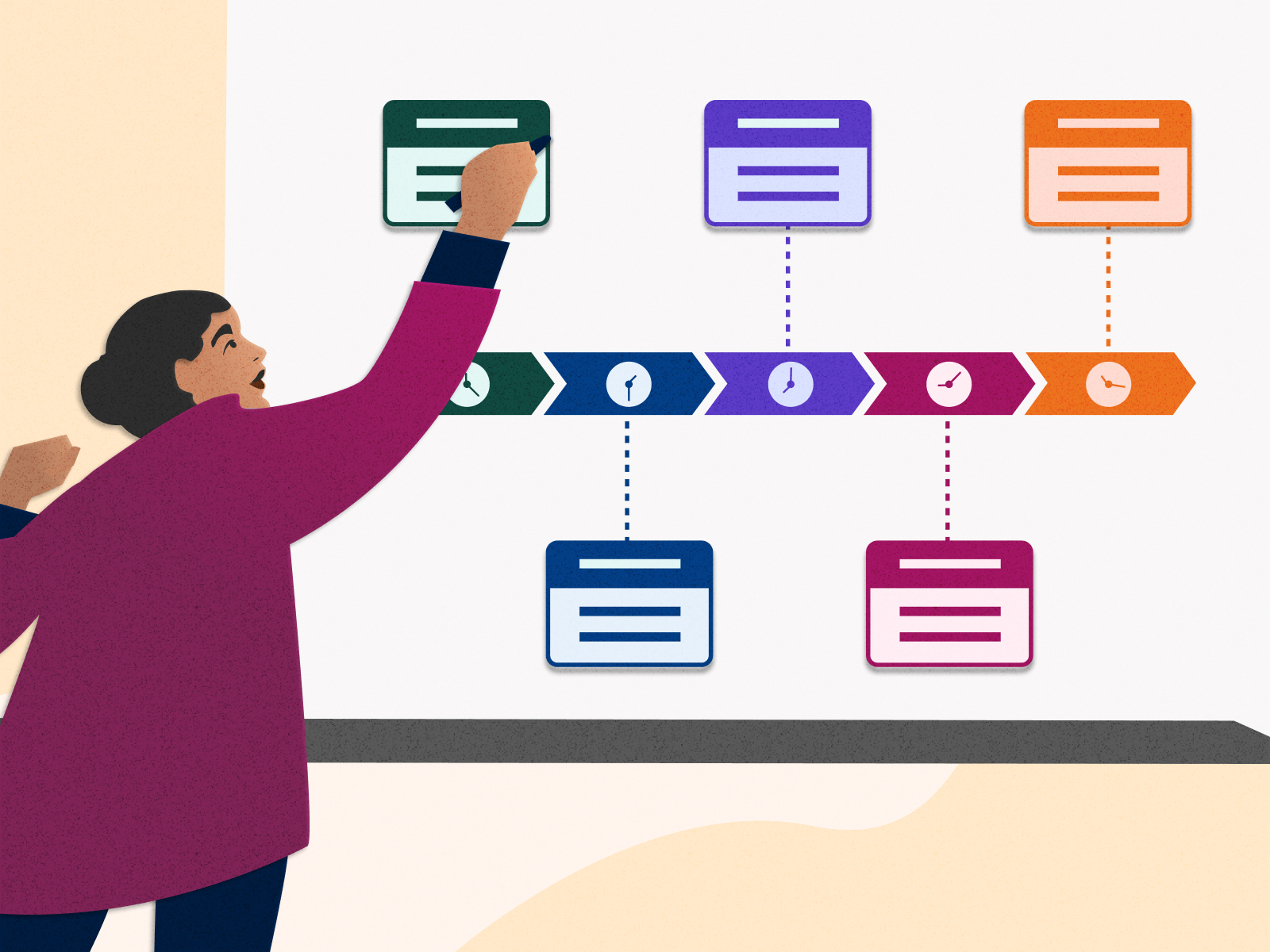
The most common question first-time inventors ask about product development is how long it will take. The most common mistake first-time inventors make is expecting the answer to be shorter than reality supports. Physical product development runs on timelines shaped by design iteration, prototype cycles, tooling fabrication, supplier lead times, and quality validation — activities that have their own physical realities and can’t be compressed by wanting them to move faster. Understanding realistic timeline expectations across the four-phase sequence separates well-planned launches from launches that miss committed dates by months.
Quick Answer
Physical product development typically takes months to over a year from concept to first production units, depending on complexity, category, and how disciplined the process is. Phase 1 (Research & Ideation) commonly runs several weeks to a few months. Phase 2 (Design & Prototype) commonly runs a few months to over half a year for moderately complex products. Phase 3 (Sourcing & Manufacturing) commonly runs several months, with tooling alone consuming significant time for injection-molded products. Phase 4 (Branding & Marketing) launch preparation commonly runs weeks to months. Timeline compression is possible through parallel workstreams, disciplined decision-making, and appropriate resource investment; timeline extension typically results from decisions revisited late, prototype iterations that could have been avoided, and supplier problems that surface at Phase 3 rather than Phase 2.
Key Facts
- Physical product development timelines are shaped by physical realities — tooling fabrication, supplier lead times, prototype cycles — that can’t be shortened by wishing they were shorter
- Each of the four phases has its own timeline profile with different dependencies, activities, and constraints
- Products with simpler designs, established supplier relationships, and disciplined decision-making move faster than products without those advantages
- Timeline compression at the expense of validation typically produces launches with problems that add far more time than the compression saved
- First-time inventors consistently underestimate Phase 3 (Sourcing & Manufacturing) because tooling and supplier work isn’t visible until you’re in it
Key Takeaways
- Realistic timeline planning starts with understanding what each phase actually involves — not aspirational timelines that assume everything goes perfectly
- Products vary widely in timeline based on complexity; a simple mechanical product moves faster than a complex assembled product with many components
- The largest single time consumer for many products is Phase 3 tooling fabrication and supplier qualification
- Timeline compression works through parallel workstreams and early decision-making, not through skipping validation steps
- The most common timeline mistake first-time inventors make is compressing Phase 2 to reach Phase 3 faster — which typically produces Phase 3 problems that lose more time than the compression saved
- Buffer time in the schedule for normal variability produces on-time delivery; schedules without buffer produce missed dates
Table of Contents
- Why Timeline Expectations Matter (and Why First-Time Inventors Get Them Wrong)
- Phase 1 (Research & Ideation) Timing
- Phase 2 (Design & Prototype) Timing
- Phase 3 (Sourcing & Manufacturing) Timing
- Phase 4 (Branding & Marketing) Timing
- What Compresses vs Extends Timelines
- Common Timeline Mistakes First-Time Inventors Make
- How Rabbit Product Design Approaches Timeline Planning
Why Timeline Expectations Matter (and Why First-Time Inventors Get Them Wrong)
Timeline expectations shape almost every downstream decision — budget planning, financing, market entry, marketing lead time, retail commitments, and team pace. Getting expectations right at the start produces decisions aligned with reality; getting them wrong produces mismatches that compound over the process.
First-time inventors consistently underestimate timelines. What looks like a six-month project often becomes twelve; a year becomes eighteen months. The underestimation isn’t about specific tasks taking longer — it’s about the full sequence of activities, dependencies, iteration cycles, and normal surprises first-time inventors haven’t experienced yet.
The reasons cluster. Underestimating iteration — first-time inventors plan for one prototype cycle when three or four is typical. Underestimating supplier lead times — tooling fabrication, first-article samples, and production runs each have timelines that don’t compress with pressure. Underestimating decision friction — decisions that seem quick often require research and review that consume weeks. Underestimating normal surprises — tooling issues, supplier delays, quality problems, and design revisions happen even on well-managed projects.
Phase 1 (Research & Ideation) Timing
Phase 1 work establishes the foundation the rest of the project builds on. Timeline varies significantly with product complexity and how much market research the project needs.
What Phase 1 Includes
Phase 1 activities include patent research and freedom-to-operate analysis, product evaluation against market need, technology research on components and materials, competitive analysis, unit economics modeling, and preliminary requirements definition. Each activity has its own timeline; running them in parallel where possible compresses the total.
Typical Phase 1 Duration
Phase 1 commonly runs a few weeks for simple products with well-understood markets to several months for complex products in emerging or specialized categories. Patent research alone can take weeks even for well-defined searches, longer for products in dense IP landscapes. Market research thoroughness scales with how much information is available and how much validation the product concept requires.
What Extends Phase 1
Phase 1 extends when the product concept isn’t well-defined at the start (requiring more research to sharpen), when patent landscapes are dense (requiring more thorough freedom-to-operate work), when market validation reveals problems that require rethinking the concept, or when unit economics modeling reveals that the initial business model doesn’t work and needs adjustment. Extended Phase 1 work is often better than compressed Phase 1 work — problems caught here are much cheaper to fix than problems caught later.
Phase 2 (Design & Prototype) Timing
Phase 2 is where design work and prototyping happen. Timeline varies more here than in any other phase because complexity ranges widely across products.
What Phase 2 Includes
Phase 2 activities include industrial design (form, ergonomics, aesthetics), mechanical design (structural, tolerances, assembly), electronics design where applicable, design review cycles, and prototyping. Prototyping in production-grade materials through CNC machining and soft tooling produces samples that validate design against actual production behavior.
Typical Phase 2 Duration
Phase 2 commonly runs a few months for simple products to over half a year for complex products with multiple components and assemblies. Simple mechanical products with few parts move faster; complex products with electronics, multi-component assemblies, or novel mechanisms take longer. Iteration cycles significantly affect total Phase 2 time — products that require three or four prototype iterations spend more time in Phase 2 than products that need only one or two.
What Extends Phase 2
Phase 2 extends when design decisions get revisited late (requiring rework of downstream design), when prototype iterations reveal problems the design didn’t anticipate, when component selection changes late, when user testing reveals functional problems, or when regulatory requirements emerge that Phase 1 didn’t identify. Extended Phase 2 is often the result of Phase 1 shortcuts — problems that should have been identified during Phase 1 research surface during Phase 2 and force rework.
Phase 3 (Sourcing & Manufacturing) Timing
Phase 3 is often the largest single timeline consumer, and the phase first-time inventors most consistently underestimate. Tooling and supplier work happens on physical timelines that don’t compress with pressure.
What Phase 3 Includes
Phase 3 activities include supply chain qualification, tooling design and fabrication, first-article inspection, production build, quality validation, and logistics setup. Each activity has its own timeline; the sequence typically runs largely in series because later activities depend on earlier ones completing.
Typical Phase 3 Duration
Phase 3 commonly runs several months for products with existing supplier relationships and simple tooling, over half a year for products requiring new supplier qualification and complex tooling. Injection molding tooling alone commonly takes months to design, fabricate, and debug. First-article inspection and design adjustments add weeks. Production runs and quality validation add more weeks. Logistics setup varies with complexity.
What Extends Phase 3
Phase 3 extends when tooling debug reveals design issues, when supplier quality problems produce rejected first-article samples, when component supply chain issues delay production, when quality validation reveals problems requiring investigation, or when logistics complications delay shipping. Buffer in the Phase 3 schedule accommodates these variabilities; schedules without buffer produce missed dates when any occur.
Phase 4 (Branding & Marketing) Timing
Phase 4 timeline runs in parallel with Phase 3 for many activities and continues after Phase 3 into launch and beyond.
What Phase 4 Includes
Phase 4 activities include brand identity development, packaging design and production, go-to-market strategy, marketing content creation, distribution channel setup, launch coordination, and post-launch operations. Many Phase 4 activities can run in parallel with Phase 3 production work; some must wait for production units to be available.
Typical Phase 4 Duration
Phase 4 launch preparation commonly runs weeks to months of concentrated work leading up to launch. Brand identity and packaging design typically start well before launch to allow production of packaging materials. Marketing content creation takes time and should incorporate photography of actual production units. Distribution channel setup varies — direct-to-consumer moves faster than retail placement, which often requires months of relationship development.
What Extends Phase 4
Phase 4 extends when Phase 3 production timing slips (delaying launch), when brand or packaging revisions are required late in preparation, when distribution partners require lead time the schedule didn’t account for, or when regulatory approvals or certifications complete later than expected. Phase 4 timeline is often the last variable adjusted when other phases slip — which can compress launch preparation into a period too short to execute well.
What Compresses vs Extends Timelines
Timeline compression is possible but works through specific mechanisms rather than through general pressure to move faster.
What Actually Compresses Timelines
Parallel workstreams where dependencies allow. Some activities can run simultaneously rather than sequentially — Phase 2 design work and Phase 3 supplier qualification can start in parallel where appropriate. Disciplined decision-making — decisions made once with adequate research rather than revisited multiple times save significant time. Experienced engineering resources — teams that have developed similar products before make fewer wrong turns than teams learning as they go. Established supplier relationships — suppliers with prior relationships have shorter engagement cycles than new suppliers requiring qualification from scratch. Appropriate resource investment — adequate staffing and capital produces faster progress than under-resourced projects.
What Extends Timelines
Late-stage design changes — changes made after Phase 2 completes typically require rework across multiple downstream activities. Iteration cycles that could have been avoided — problems caught during Phase 1 research would have been much cheaper to address than the same problems caught during Phase 3 tooling. Under-resourced teams — projects with insufficient staffing or budget produce slow progress that’s often false economy. Sequential rather than parallel work — teams that treat every activity as needing the previous one to complete before starting produce longer timelines than teams that identify parallel opportunities.
Common Timeline Mistakes First-Time Inventors Make
Several recurring timeline mistakes appear across first-time inventor projects.
Compressing Phase 2 to reach Phase 3 faster. Phase 2 design work is where cost, quality, and manufacturability get shaped. Compressing Phase 2 to move to Phase 3 sooner typically produces Phase 3 problems (tooling issues, supplier problems, quality failures) that lose more time than the compression saved. The counterintuitive rule is that thorough Phase 2 work produces faster overall timelines than rushed Phase 2 work.
Committing to launch dates before Phase 3 is understood. Launch dates set based on optimistic Phase 3 estimates often get missed as the actual work reveals its true duration. Setting launch dates after Phase 2 completes and Phase 3 quotes are in produces defensible commitments; setting them before produces commitments that get revised repeatedly.
No buffer for normal surprises. Well-managed projects encounter surprises — tooling issues, supplier delays, quality problems. Schedules without buffer produce delivery dates that get missed when any surprise occurs. Buffer of appropriate size to the project produces on-time delivery even when surprises happen; buffer sized too tight or eliminated produces missed dates.
Treating Phase 4 as an afterthought. Products where Phase 4 planning starts only after Phase 3 completes typically produce compressed launch preparation, poor marketing content, and weak channel engagement. Phase 4 activities should start in parallel with Phase 3, not follow it as a documentation exercise.
Assuming faster is always better. Timeline compression at the expense of validation typically produces launches with problems that add far more time than the compression saved. Products with disciplined validation launch later but with fewer field problems, better brand outcomes, and less rework than products rushed to launch.
How Rabbit Product Design Approaches Timeline Planning
Rabbit Product Design is a product development firm built around inventors, entrepreneurs, and small business owners who carry the most risk on a first physical product. The firm has 9 years in business, over 2,000 products developed, and senior engineers averaging 27 years of experience.
Timeline planning runs across all four phases as a core project management discipline. Phase 1 (Research & Ideation) establishes the timeline foundation through unit economics that inform launch commitments, market research that shapes launch windows, and preliminary complexity assessment that informs Phase 2 scope. Phase 2 (Design & Prototype) sets iteration and prototyping timelines with production-grade prototyping through CNC machining and soft tooling producing samples appropriate for evaluation. Phase 3 (Sourcing & Manufacturing) executes against realistic supplier lead times and tooling schedules established through supplier qualification. Phase 4 (Branding & Marketing) coordinates launch preparation to match production readiness rather than aspirational dates.
The five product verticals — consumer products, soft goods (bags, cases, wearables, sports gear, pet products), hardware (brackets, hinges, latches, mounting systems, mechanical assemblies, fixtures, storage hardware), electronic products and IoT, and inventor projects — each carry different typical timeline profiles. Consumer products with moderate complexity often run several months to a year. Soft goods can be faster where tooling is minimal but material sourcing adds time. Hardware products vary significantly with complexity of the mechanical assembly. Electronic products typically add time for component selection, PCB layout, and electrical validation. Inventor projects for first-time inventors typically run longer than repeat-product timelines because of the learning curve involved.
On the timeline question first-time inventors ask most often: honest timeline estimates set at the start produce better outcomes than optimistic ones that get revised repeatedly. Senior engineers who have developed many products know what typical timelines look like for each product category and can set realistic expectations from the start. The value of an engagement with Rabbit Product Design includes the timeline judgment that produces defensible commitments — which is what separates well-planned launches from launches that miss committed dates by months.
Timeline Planning Services Across Phases
- Phase 1: realistic timeline scoping based on complexity assessment, market research, and unit economics
- Phase 2: design and prototype scheduling with realistic iteration cycles and production-grade prototyping through CNC machining and soft tooling
- Phase 3: tooling and supplier lead time coordination, first-article inspection scheduling, production ramp planning
- Phase 4: launch preparation coordination in parallel with Phase 3, brand and marketing timing aligned to production readiness
To begin a product development engagement with realistic timeline planning, contact Rabbit Product Design.
Conclusion
Physical product development runs on timelines shaped by design iteration, prototype cycles, tooling fabrication, supplier lead times, and quality validation. First-time inventors consistently underestimate these timelines because they haven’t experienced them yet. Phase 1 commonly runs weeks to a few months. Phase 2 commonly runs a few months to over half a year. Phase 3 commonly runs several months, with tooling often the largest single time consumer. Phase 4 commonly runs weeks to months of concentrated launch preparation. Timeline compression works through parallel workstreams and disciplined decision-making, not through skipping validation. For inventors, entrepreneurs, and small business owners developing first physical products, realistic timeline expectations set at the start produce far better outcomes than aspirational timelines that get revised repeatedly.
FAQ
How long does it take to develop a physical product from concept to first production units?
It depends significantly on complexity, category, and how disciplined the process is. Simple products can move from concept to first production in several months; complex products with electronics, multi-component assemblies, or novel mechanisms typically run a year or longer. First-time inventors typically run longer than repeat-product timelines because of the learning involved. Setting realistic expectations at the start produces better outcomes than optimistic ones that get revised repeatedly.
Can I compress the timeline if I have budget to spend?
Some compression is possible through parallel workstreams, appropriate resource investment, and experienced engineering teams. Other elements resist compression — tooling fabrication has physical timelines that don’t shorten with pressure, and validation cycles can’t be safely skipped. Budget helps but doesn’t eliminate the physical realities that shape product development timelines.
What’s the biggest timeline mistake first-time inventors make?
Compressing Phase 2 to reach Phase 3 faster. Phase 2 design work is where cost, quality, and manufacturability get shaped. Compressing Phase 2 typically produces Phase 3 problems (tooling issues, supplier problems, quality failures) that lose more time than the compression saved. Thorough Phase 2 work produces faster overall timelines than rushed Phase 2 work — a counterintuitive rule but a consistent one.
Should I commit to a launch date before I start Phase 3?
Not with high confidence. Launch dates set before Phase 3 tooling schedules and supplier lead times are understood typically get missed. Setting launch dates after Phase 2 completes and Phase 3 supplier quotes are in produces defensible commitments; setting them earlier produces dates that get revised repeatedly.
How much buffer should my timeline include?
Enough to accommodate normal surprises without missing committed dates. The specific buffer varies by project complexity, phase, and how much prior experience the team has with similar products. Products with well-established supplier relationships and simple designs need less buffer than products in new categories with new suppliers. The pattern is consistent: buffer of appropriate size produces on-time delivery; buffer sized too tight or eliminated produces missed dates.
Sources
- Rabbit Product Design
- Fictiv — Design for Manufacturing (DFM): A Guide to Developing Products Efficiently
Keywords: product development timeline, how long product development takes, physical product timeline, product development phases, realistic product development
